
Uranus: the primordial sky
Uranus, more precisely Ouranos (Οὐρανός), is the divine personification of the sky in Greek cosmogony. Unlike Zeus, who later rules the heavens as king of the Olympians, Uranus is the sky itself: the overarching expanse that embraces Earth and provides a dwelling for the gods. In Hesiod’s Theogony, Gaia brings forth starry Uranus as a counterpart equal to herself, so that he can cover her on every side. His identity is therefore cosmological before it is political or personal. To understand him is to understand how the early Greeks imagined the world acquiring shape and generations of divine beings.
A god before the Olympians
Uranus belongs among the primordial beings, often called Protogenoi in modern mythological organization. He precedes the Titans and the Olympians; indeed, he is father of the first generation of Titans. He should not be described as a Titan himself. His enormous importance lies in the foundation of divine descent and the succession of cosmic regimes: Uranus gives way to Cronus, and Cronus eventually gives way to Zeus. His story is the first great crisis of authority in Hesiodic mythology.
Name and ancient perspective
Ouranos is the Greek word for sky or heaven. Latin literature and later English convention use Uranus, whereas Ouranos is closer to the Greek form. The name can denote the visible sky as a physical reality and the god personifying that reality. These two senses frequently overlap, but this does not make the figure insignificant: the physical universe itself is presented as alive, generative and capable of suffering defeat.
Creation and conflict
In the Hesiodic account Uranus is both child and consort of Gaia. Their union produces the Titans, the three Cyclopes and the three Hundred-Handers. His refusal to allow some offspring to emerge into the light burdens Earth and drives Gaia to engineer his overthrow by their son Cronus. The result is not merely a family quarrel: the separation of Heaven and Earth enables a new cosmic order and establishes the pattern of divine succession.
Historical caution
Accounts of primordial figures differ among Greek poets and later commentators. Hesiod supplies the fullest early narrative of Uranus’ birth, violence and overthrow. Other traditions can place heaven in a different genealogy or treat him chiefly as a cosmic element. A reliable encyclopedia entry must identify which version it follows rather than flatten all Greek tradition into a single fixed family tree.
Embodiment of heaven
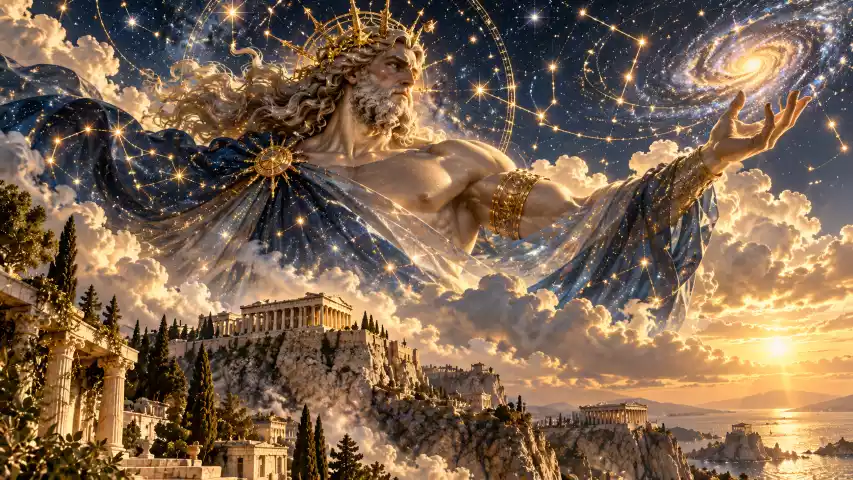
Uranus’ fundamental domain is the entire heaven above Earth, particularly the star-bearing vault. He is not simply a patron who happens to govern weather: in the archaic cosmogonic vision he is the encompassing sky as a living deity. This explains why his body and location matter in the myth. When he presses upon Gaia, heaven and earth have not yet been differentiated in the way human experience requires.
Generative cosmic power
The union of Gaia and Uranus generates many of the beings through whom later Greek myth explains divine functions and cosmic conflict. Oceanus, Hyperion, Rhea, Themis and Cronus are among their twelve Titan children. The Cyclopes and Hundred-Handers also come from this union. His generative role is enormous even though his independent later adventures are few.
Early sovereignty and its limits
Uranus is commonly described as an early ruler or dominant power of the cosmos. This sovereignty is not identical to Zeus’ later divine kingship, which is stabilized through alliances, distribution of honors and the resolution of succession struggles. Uranus seeks to suppress the independence of his offspring and is destroyed politically by that very attempt. His authority is primal but unstable.
The starry vault
Hesiod calls Uranus starry. The phrase is more than ornamental, since the sky is the visible dwelling of celestial phenomena and marks the upper boundary of the ordered universe. Uranus is not Helios, Selene or Eos: those beings express the sun, moon and dawn; Uranus is the overarching heaven within which such phenomena appear.
Separation and the emergence of space
The most important transformation connected with Uranus is his forced separation from Gaia. The violence inflicted by Cronus ends the condition in which Heaven continuously presses upon Earth. Interpreters have often understood this as the mythic creation of room for the younger divine generation. The original poem emphasizes the suffering of Gaia and the release of succession, rather than supplying a modern scientific account of the universe.
The star-filled sky
The most faithful ancient representation of Uranus is not a standardized human portrait but the starry expanse itself. Ancient texts treat him as the vault that envelops Gaia. Any anthropomorphic illustration is an interpretation of a primordial cosmic being whose earliest identity is spatial and elemental, not a human body with fixed garments and attributes.
An encompassing male figure
Later allegorical art may represent Uranus as an older or imposing male deity spreading across or above the Earth. Such images translate the relation of sky and ground into a human pose. They are useful but should not be mistaken for a universally prescribed ancient costume or a single canonical statue type.
The sickle in the succession myth
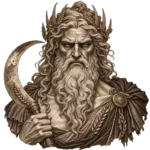
The curved sickle belongs principally to the action of Cronus, not to Uranus’ normal personal equipment. Gaia fashions the sharp implement, and Cronus uses it to castrate his father. The sickle therefore identifies the decisive event of Uranus’ story and the end of his dominance, rather than his daily power as sky.
Blood, sea foam and the birth of new beings
The violent separation generates vivid symbolic imagery. Blood falling upon Gaia produces the Erinyes, Giants and Meliae in Hesiod’s account, while the severed genitals thrown into the sea lead to the birth of Aphrodite. These elements are mythic consequences of an injury to the sky-god. They are not items Uranus carries as attributes.
Distinguishing Uranus from Zeus
Thunderbolts, eagles and the characteristic regal imagery of Olympian Zeus should not automatically be applied to Uranus. Although both are associated in some way with heaven, Uranus is the primordial sky and Zeus is a much later ruler within the genealogical sequence. Accurate visualization should emphasize the earlier cosmic identity.
Gaia brings forth heaven
Hesiod, Theogony 116–128, places Gaia among the earliest beings and states that she produces starry Uranus, equal to herself, to cover her entirely and provide a firm dwelling for the blessed gods. Gaia also produces mountains and Pontus without sexual union. This origin establishes a primordial stage in which the great components of the world become divine entities.
The twelve Titans
Theogony 132–138 gives the children of Gaia and Uranus: Oceanus, Coeus, Crius, Hyperion, Iapetus, Theia, Rhea, Themis, Mnemosyne, Phoebe, Tethys and Cronus. Cronus, the youngest, comes to hate his father. The enumeration matters because it lays out the family from which much of the later Olympian world descends.
Cyclopes and Hundred-Handers
Theogony 139–153 adds the one-eyed Cyclopes—Brontes, Steropes and Arges—and the Hundred-Handers Cottus, Briareus and Gyges. These are not generic monsters loosely related to Uranus. They are named offspring within the earliest divine genealogy, and their extraordinary forms signal powers that the existing cosmic regime struggles to contain.
The imprisonment of his children
Hesiod says Uranus hated his children and concealed them inside Gaia rather than allowing them into the light. The Earth groaned under the burden. The detail is essential: Gaia acts not from simple ambition but because the generative process is obstructed. The primordial father’s attempt to prevent emergence sets the conditions for his loss of power.
Cronus and the adamantine sickle
Gaia devises a plan and makes a sickle. Cronus alone among her children accepts the task. When Uranus comes to lie with Gaia, Cronus reaches from hiding and cuts off his father’s genitals (Theogony 154–182). The episode is shocking because the poem makes cosmic separation and succession arise from bodily violence. It is not a literal model of human family ethics, but a myth of how an oppressive primordial configuration is broken.
Erinyes, Giants, Meliae and Aphrodite
The blood from Uranus falls onto Gaia, who gives birth in time to the Erinyes, the Giants and the Meliae. The severed genitals drift on the sea, and Aphrodite emerges from the foam in Hesiod’s account (Theogony 183–206). This is a specific birth tradition: other Greek sources, including Homeric genealogical material, can present Aphrodite differently. Distinguishing versions prevents a false appearance of total uniformity.
Prophecy and the next generations
Even after his defeat, Uranus remains relevant through the genealogical and prophetic structure of succession. Hesiod later describes Cronus knowing through Gaia and starry Uranus that he would be overcome by his own child (Theogony 463–465). The defeated sky thus still appears within the transmission of cosmic knowledge; he is not erased from the world when his political dominance ends.
From Cronus to Zeus
The myth of Uranus anticipates Cronus’ attempt to suppress his children and Zeus’ eventual victory. The repeated anxiety about offspring makes succession the central problem of early Greek cosmogony. Uranus’ story is therefore the first act of a larger sequence, rather than an isolated cruel anecdote.
A cosmic figure rather than a major civic patron
Uranus occupies a foundational place in literary theology, but surviving evidence does not establish a widespread independent civic cult comparable to those of Zeus, Apollo or Athena. The distinction is important: cosmological importance and the number of surviving temples are different measures. His role is primarily in explanations of origins and divine descent.
Invoking heaven
Ancient Greek poetry and prayers could call upon heaven as witness or as a universal sacred presence. Such references do not always amount to worship directed to Uranus as a personal deity with a dedicated sanctuary. Depending on context, ouranos can signify the visible sky, the divine region above, or the personified cosmic power.
Primordial beings in later theology
Later religious and philosophical traditions sometimes elevated cosmic elements in sophisticated theological schemes. Uranus could be discussed as a first or ancient divine power, particularly when interpreters revisited theogonies and the separation of earth and sky. This reception should be distinguished from the specific actions described in the archaic Hesiodic poem.
No invented rituals
There is no sound basis for asserting a standard Uranus initiation ceremony, a prescribed altar offering, priesthood or regular panhellenic festival. Descriptions of such practices should not be constructed from modern associations with the sky. Where the historical record is sparse, that scarcity is itself a valuable fact for readers.
Why the distinction matters
An encyclopedia of Greek gods should not treat every divine being as though it has the same cultic profile. Uranus is indispensable in genealogy and cosmology, while gods like Asclepius or Demeter have well documented sanctuary practice. Keeping these kinds of evidence separate is a necessary part of responsible historical interpretation.
The sky as cosmic place
Uranus’ central sacred location is not an earthly building. As personified heaven, his very being is the encompassing upper world. Hesiod’s statement that he covers Gaia and provides a dwelling for blessed gods defines his place cosmologically. It should not be confused with an archaeologically identified temple.
Gaia and the horizon
The meeting of earth and sky is the essential spatial image of Uranus’ story. His myth begins with close enclosure of Gaia and changes through violent separation. This relationship gives the horizon symbolic meaning, even though the poem does not establish a singular pilgrimage destination for Uranus.
No securely established principal sanctuary
Unlike Olympian divinities identified with Delphi, Olympia, Eleusis or the Acropolis, Uranus is not reliably associated with one chief classical Greek sanctuary. Claims of a major temple of Uranus should be checked critically rather than repeated merely because modern mythology websites expect every god to possess one.
Poetic geography of the upper world
Theogonic poetry places Uranus within the architecture of the universe. This literary geography matters for understanding Greek religious imagination, but it is distinct from evidence for site-specific public worship. The surrounding stars and divine dwelling are the meaningful geographical references.
Later interpretations
Later allegorical and philosophical writers could interpret Heaven as a generative first principle. Those readings provide an afterlife to Uranus’ cosmic presence, yet they should not be projected backward as descriptions of a lost uniform archaic shrine system.
Gaia: origin and consort
In Hesiod, Gaia bears Uranus without a partner and later unites with him. That relationship is uncomfortable in modern kinship terms but belongs to the earliest cosmic genealogy, when the fundamental components of reality reproduce as divine beings. Gaia also organizes his overthrow because he traps their children within her.
Twelve Titan children
The Titan offspring named by Hesiod are Oceanus, Coeus, Crius, Hyperion, Iapetus, Theia, Rhea, Themis, Mnemosyne, Phoebe, Tethys and Cronus. This is the standard twelve-member list in Theogony 132–138. Through these children Uranus becomes ancestor to a large portion of the divine family that later populates Greek myths.
Cyclopes and Hundred-Handers
Brontes, Steropes and Arges are the three Cyclopes. Cottus, Briareus and Gyges are the three Hundred-Handers. Both groups are offspring of Gaia and Uranus in Hesiod. Their suppression provokes the crisis, and their later roles in the victory of Zeus show how primordial generations remain relevant.
Cronus as the rebellious son
Cronus is the youngest Titan in the standard account and the son who attacks Uranus with the sickle. His victory creates a new ruling generation but does not end anxiety about succession. Cronus’ own fear of being displaced repeats the same underlying pattern.
Aphrodite and the blood-born beings
In Hesiod’s account Aphrodite arises from sea foam associated with Uranus’ severed genitals. The Erinyes, Giants and Meliae arise from blood received by Gaia. These births are direct consequences of the castration, but their modes of generation differ from the normal union that produced the Titans.
Zeus and the later order
Zeus is Uranus’ descendant through Cronus and Rhea, not his immediate son. The relation explains the scale of succession: heaven’s primordial embodiment yields to the Titans, whose king is replaced by an Olympian grandson. Accurate kinship here prevents the misleading idea that Zeus directly fights Uranus for the throne.
Ouranos and Uranus
Ouranos is a transliteration of the Greek Οὐρανός; Uranus is the familiar Latinized form. Both name the same Greek primordial sky figure. In this article Uranus is used for readability while retaining Ouranos where Greek spelling and classical sources matter.
Roman Caelus
Roman Caelus, also written Coelus in later Latin spelling, is the closest conventional Roman counterpart to Uranus as personified sky. This is a broad interpretive identification and does not imply that Roman religious practice simply reproduced every episode of Hesiod’s Greek account.
Not Zeus
It is vital not to conflate Uranus with Zeus. Uranus is the primordial vault and ancestor of the Titans; Zeus is a later Olympian who governs sky, thunder and divine sovereignty after a different succession story. Their overlap in heavenly imagery is not identity.
Astronomical afterlife
The planet Uranus received its modern name from this Greek deity, following a convention of naming planets after ancient divine figures. This is a later scientific naming decision and must not be taken as evidence that archaic Greeks recognized that planet as the sky god Uranus.
Comparative myths of sky and earth
Scholars sometimes compare the separation of Uranus and Gaia with other world traditions describing the separation of Heaven and Earth. Such comparison may illuminate structural patterns, but it cannot establish identical historical rituals or narratives. The Greek evidence must remain the primary basis of this entry.
Hesiod, Theogony 116–153
The primary early evidence: Gaia’s emergence and generation of starry Uranus (approximately lines 116–128), followed by the twelve Titans, three Cyclopes and three Hundred-Handers (approximately lines 132–153). This is the core genealogy and identifies Uranus as a primordial figure rather than a Titan.
Hesiod, Theogony 154–210
The account of Uranus hiding his children within Gaia, her fashioning of a sickle, Cronus’ assault and the births connected with the blood and sea foam. The passage anchors the detailed sequence of repression, castration, Erinyes, Giants, Meliae and Aphrodite.
Hesiod, Theogony 453–506
The next cycle of succession: Rhea’s children with Cronus and the threat that Cronus will be displaced, known through Gaia and starry Uranus. This is evidence of Uranus’ continued place in genealogical prophecy after his overthrow.
Apollodorus, Library 1.1.1–1.2.1
A later mythographic organization of the early genealogies and succession of Uranus, Cronus and Zeus. It is useful for comparing transmitted variants but should not silently supersede Hesiod’s older narrative.
Modern interpretation and limitations
Useful contextual study includes the Center for Hellenic Studies’ presentation of Hesiod’s Theogony and classical textual collections. The literary sources are extensive; direct evidence for a major independent public cult of Uranus is limited. That difference should inform the article rather than be disguised.
 GaiaMother and consort in Hesiod
 CronusTitan son who overthrows him
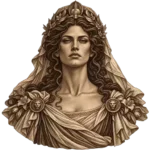 RheaTitan daughter
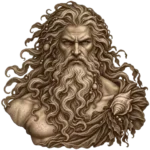 OceanusTitan son
 HyperionTitan son
 TheiaTitan daughter
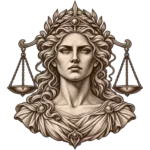 ThemisTitan daughter
 TethysTitan daughter
 IapetusTitan son
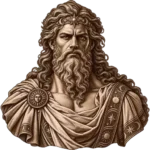 CoeusTitan son
 MnemosyneTitan daughter
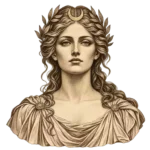 PhoebeTitan daughter
 AphroditeGoddess born from the sea foam in Hesiod
 ZeusOlympian grandson in the succession myth