
Oceanus: the Titan encircling the inhabited world
Oceanus (Greek Okeanos, Ὠκεανός) is one of the twelve Titans born to Gaia and Uranus in Hesiod’s account of the earliest divine generations. He is not simply a mythic name for the saltwater oceans of modern geography: he personifies the enormous river imagined to flow around the margins of the earth. At the edges of the human world his waters mark a boundary between familiar lands and the extraordinary regions of myth.
A Titan before the Olympian order
Oceanus belongs to the same divine generation as Cronus, Rhea, Hyperion and Theia. Unlike Zeus and Poseidon, he is not an Olympian successor to the Titans. His central identity is older and cosmological. He supplies the watery perimeter in an archaic model of the world rather than commanding the high seas as Poseidon does in the familiar Olympian order.
Father of a vast watery family
With his sister and consort Tethys, Oceanus fathers river gods and the Oceanids, a vast group of divine daughters associated with waters, places and various functions. Hesiod describes three thousand daughters and a comparable number of rivers. These figures connect the earth-encircling current with the streams and fresh water known in the inhabited world.
Different ancient understandings
The Iliad uses the language of Oceanus as the origin or generation of the gods, whereas Hesiod places Chaos and the earliest primordial entities first and makes Oceanus a child of Gaia and Uranus. These statements belong to different poetic and cosmological perspectives, not to one consistent genealogy. The article preserves the distinction rather than selecting a single explanation for every ancient witness.

The encircling river
Okeanos was often conceived as a vast river running around the disc or perimeter of the inhabited earth. The image explains why poets place distant peoples, marvels and cosmic transitions near his banks. Its ancient significance should not be erased by translating his name as the modern “ocean.”
The sources of rivers and springs
Through his children with Tethys, Oceanus is genealogically tied to the rivers that flow across the world. Nile, Alpheus, Achelous, Scamander and many others occur in the Hesiodic catalogue, binding remote geography to divine family relationships.
Cosmic boundary and journey
Oceanus forms a threshold. Many epic journeys refer to approaching or crossing his stream when a hero nears the limits of ordinary geography. His cosmic role is therefore spatial and symbolic: he divides the lived world from its outer and sometimes uncanny margins.
Generative water
In the Iliad, Oceanus appears in language that treats him as a primal source of living things or divinities. This prestige is not identical to the genealogy in Hesiod. What persists is an ancient intuition that water is fundamental to beginnings and reproduction.
Not the sovereign of all maritime waters
Poseidon is the prominent Olympian god of the sea, earthquakes and horses. Pontus is a separate primordial embodiment of the sea in Hesiod. Oceanus belongs to a different image: the world-girdling fresh-water stream and its divine family. Greek tradition contains overlapping concepts of water without collapsing them into one deity.
A horned, bearded divine figure
Greek and Roman art sometimes represents Oceanus as a mature bearded head or bust, often with aquatic features such as crab-claw or bull-like horns. These forms vary by period and medium; they should not be treated as one universally fixed archaic portrait.
Fish, waves and river imagery
Aquatic ornament, flowing hair or beard, fish and curling water can signal the abundance and motion of his realm. Such features are best interpreted as artistic signs of water, not as evidence that Hesiod supplied a detailed physical description.
World-encircling stream
The most faithful conceptual symbol is not a trident but the immense ring of flowing water around the earth. Maps, cosmological diagrams and narrative descriptions express the role of Oceanus more accurately than a generic picture of a sea king.
Distinguishing him from Poseidon
Poseidon is commonly recognizable by the trident and marine chariot. Assigning those symbols automatically to Oceanus would confuse two different figures. Oceanus can be shown as an ancient, aqueous Titan without borrowing the Olympian sea god’s principal attributes.
Birth among the twelve Titans
Hesiod, Theogony 132–138, lists Oceanus among the children of Gaia and Uranus. This genealogical placement makes him a sibling of Cronus, Rhea, Tethys, Hyperion and the other Titans.
Oceanus and Tethys: parents of rivers and Oceanids
Theogony 337–370 gives the defining family catalogue. Tethys bears the rivers to Oceanus and an enormous company of Oceanid daughters. Among named children are Metis, Styx, Eurynome, Tyche and numerous river gods. The traditional number three thousand is an epic expression of abundance, not a modern demographic claim.
An origin of the gods in Homer
In Iliad 14.201 and 14.302, Hera refers to Oceanus and Tethys in terms of divine beginnings. At 14.246 Hypnos calls Oceanus the source of all. This differs from the ordering of Hesiod’s Theogony and reveals the coexistence of distinct cosmogonic idioms in Greek epic.
The alleged quarrel of Oceanus and Tethys
In Iliad 14 Hera tells Aphrodite that Oceanus and Tethys have quarreled and that she wants to reconcile them. This statement is part of Hera’s deceptive pretext in her plan to distract Zeus; it must not be presented uncritically as a confirmed independent myth of their marital rupture.
Oceanus and the Titan conflict
Oceanus is often said in modern summaries to have stayed out of the Titanomachy, but the surviving ancient evidence does not justify turning that silence into a detailed neutralist biography. Hesiod does not narrate an individual combat episode for him. Prometheus Bound depicts Oceanus attempting to advise Prometheus after Zeus has gained power; this is a separate dramatic witness.
Oceanus visiting Prometheus
In the tragedy Prometheus Bound, traditionally transmitted under Aeschylus’ name, Oceanus arrives and counsels Prometheus to be cautious in opposing Zeus. Their exchange illustrates Oceanus as an elder divine figure able to speak about the new regime, although its precise dramatic perspective should not be generalized to every Greek tradition.
Beyond the river: the world’s limit
Epic geography situates Oceanus at the outer boundary. Odyssey 11.13–22 sends Odysseus to the far edge by the river Oceanus on the route toward the realm of the dead. The passage shows why his name functions both as divine personification and as cosmological geography.
Limited evidence for independent civic worship
Oceanus is unquestionably prominent in myth and art, but evidence for temples or recurring polis festivals devoted to him alone is limited. An expansive fictional network of sanctuaries should not be invented simply because he is a major Titan.
Aquatic religion through his descendants
Greek religion included local honors to rivers and springs; many river gods belonged to the divine descendants of Oceanus and Tethys. Such local cults help explain the religious landscape around water but cannot automatically be counted as worship of Oceanus himself.
Poetry and cosmology as religious importance
Oceanus’ name carried sacred significance in epic and genealogy even when direct public cult evidence is scarce. His divine status is expressed especially through the imagined structure of the universe, his relationship with Tethys and the many named freshwater descendants.
Later visual prominence
Roman decorative programs especially made Oceanus an imposing watery face in mosaics. Visual importance in a domestic or public artwork is evidence for reception and symbolism, not proof that each image belonged to a temple dedicated to the Titan.
The rim of the earth
The great locale of Oceanus is the world’s boundary, described as a surrounding stream rather than a fixed city or shrine. Its role in ancient epic geography is more central than any one archaeological cult site.
The approach to the underworld in the Odyssey
Odyssey 11 places Oceanus near the remote landscape approached by Odysseus on his journey to consult the dead. He is not Hades, the ruler of the dead; the river is part of an imagined route beyond normal human space.
Rivers of the known world
The Nile, Alpheus, Achelous, Scamander and other waterways appear among his children in Hesiod. These are geographic rivers with their own divine personifications rather than distinct Oceanus temples.
No securely established major sanctuary
Because the surviving evidence does not identify an eminent panhellenic sanctuary belonging uniquely to Oceanus, the distinction should be stated plainly. Ancient geographical and mythic associations must not be misrepresented as verified cult architecture.
Gaia and Uranus
Hesiod names Gaia and Uranus as parents of the Titans, including Oceanus. This places him among the great generation preceding the Olympians.
Tethys
Tethys is Oceanus’ sister and consort in the common Hesiodic genealogy. They are parents of the rivers and Oceanid daughters, a union that symbolizes the abundance of flowing waters.
Styx
Styx is named as a distinguished Oceanid in Theogony 361–362. Her role in the oath system of the gods and her link to the waters of the underworld should be discussed separately from Oceanus’ own encircling stream.
Metis
Metis appears in Hesiod’s Oceanid catalogue. She is later crucial to Zeus’ succession narrative, making Oceanus a genealogical ancestor within the Olympian family.
Tyche and Eurynome
Tyche and Eurynome also occur among the Oceanids in Hesiod. Their separate mythic roles illustrate how broad and diverse the Oceanid group became.
Cronus and the Titan siblings
Cronus, Hyperion, Theia, Rhea and the other Titans are siblings of Oceanus within the Hesiodic first-generation family. Their political and narrative roles should not be projected automatically onto Oceanus.
Poseidon and Pontus are distinct
Poseidon is a later Olympian ruler of the sea; Pontus is a separate primordial sea-power. These figures share aquatic associations with Oceanus but are not interchangeable and should not be listed as his children or consorts.
Greek Okeanos and Latin Oceanus
Oceanus is the established Latinized form of Greek Okeanos. Latin poetry and Roman art continue the ancient image of the encircling stream and watery divinity, while expanding his decorative visual vocabulary.
Oceanus is not Poseidon/Neptune
Neptune is the Roman counterpart of Poseidon, not a precise replacement for Oceanus. English usage of “ocean” can obscure a fundamental difference between a Titan-river and the later sea god.
Oceanus and the modern ocean
Modern geography uses “ocean” for great bodies of salt water. Ancient Okeanos can refer to waters believed to surround the earth. The linguistic connection does not make ancient cosmology a factual description of modern hydrology.
Homer versus Hesiod
Homeric language of Oceanus as divine source and Hesiodic placement of Oceanus among the children of Gaia and Uranus represent differing traditions. An encyclopedia should preserve both claims with their sources rather than force one genealogy upon all texts.
Hesiod, Theogony 132–138
Primary genealogical evidence for Oceanus as a son of Gaia and Uranus and member of the Titan generation.
Hesiod, Theogony 337–370
The essential catalogue of rivers and Oceanid daughters borne by Tethys to Oceanus; source for the conventional three-thousand figure.
Homer, Iliad 14.200–210; 14.240–246; 14.300–306
The language of divine origin and the account Hera gives about Oceanus and Tethys. Her statements occur within a deception narrative.
Homer, Odyssey 11.13–22
Oceanus as a distant geographic or cosmic boundary approached during Odysseus’ underworld journey.
Prometheus Bound 284–396
Dramatic presentation of Oceanus speaking with Prometheus. The tragedy is traditionally attributed to Aeschylus, but its authorship is disputed.
Source-critical caution
This entry separates archaic genealogy, Homeric cosmic language, tragic characterization and later artistic conventions. It does not attribute unsupported Titanomachy exploits or invented temples to Oceanus.
 GaiaMother
 UranusFather
 TethysSister and consort
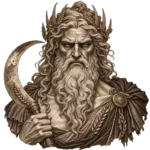 CronusBrother
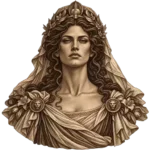 RheaSister
 HyperionBrother
 TheiaSister
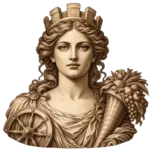 TycheDaughter, Oceanid