
Heracles, the Greek hero known as Hercules
Heracles (Ἡρακλῆς) is the greatest heroic strongman in Greek mythology, renowned for the Twelve Labours, the overcoming of monsters, journeys to the limits of the inhabited world, profound suffering and eventual admission to divine life. Hercules is his Roman name and the form most familiar in modern popular culture. The names refer to substantially the same mythological hero as received in Greek and Roman tradition, but the Greek Heracles has a history of local cult, tragic drama and heroic genealogy that predates Rome’s literary adaptation. Calling him simply an invincible strongman misses the central paradox of his stories: extraordinary power coexists with vulnerability, service, madness and an inability to shield his own family from disaster.
Meaning of his name and earlier identity
The name Heracles is traditionally interpreted as “glory of Hera,” an especially ironic designation because Hera is his relentless enemy in many myths. Pseudo-Apollodorus, Library 2.4.12, reports that the Delphic priestess bestowed the name Heracles on the hero previously known as Alcides. The story offers an ancient explanation of the name, rather than proof that every community shared an identical naming tradition. Some versions derive Alcides from his ancestor Alcaeus. Hera’s hostility and the fame resulting from hardship are therefore embedded in the ancient interpretation of his name.
Mortal hero, divine father and eventual god
The standard genealogy makes Heracles the son of Zeus and the mortal Alcmene; Amphitryon is Alcmene’s husband and Heracles’ human household father. Consequently his stories explore a figure suspended between mortal suffering and divine ancestry. He is born subject to danger, goes through war and family tragedy, and performs deeds beyond ordinary humanity. In many later traditions he is finally immortalized and married to Hebe. His career cannot be understood only as that of either an Olympian god or an ordinary mortal champion.
Why he matters historically
Heracles was not merely an invented superhero of one book. His adventures were widely known through poetry, pottery, drama, shrines and festivals. Communities claimed him as ancestor, protector and culture hero; athletes regarded him as a model of strength and endurance. His lion skin and wooden club became recognizable across the Mediterranean, while his Roman reception as Hercules extended his image into later European history. His stories also pose moral questions about violence, repentance, self-control, hospitality and the true cost of heroic fame.
Heracles and Hercules without confusion
In English, Heracles generally denotes the Greek hero and Hercules his Roman counterpart or familiar Latinized name. The distinction is valuable for an encyclopedia: it lets us discuss the Greek sources on their own terms while explaining why English-language films, comic books and common speech often use Hercules. The Roman figure did not begin as a newly invented separate hero with identical adventures; Roman authors and cults appropriated and reshaped an already ancient Greek character.

Identity, names and heroic tradition
Greek Heracles and Roman Hercules
Hercules is the standard Roman name for Greek Heracles. Roman religion embraced the hero and adapted his protective, military and civic significance. The same twelve labours remain recognizable across much of this reception, but the Roman cult of Hercules has its own history. Therefore it is useful to title a Greek mythology profile “Heracles” and explain “Hercules” immediately, rather than inventing two unrelated biographies.
Herakles, Heracles, Herakles and Alcides
Herakles and Heracles are variant transliterations of Ἡρακλῆς; Alcides is an alternate ancient heroic name. These are not automatically separate entities deserving duplicate encyclopedic pages. Search-engine alternate-name fields can record them while preserving one main Greek profile.
From Roman Hercules to modern culture
Hercules survived as a symbol of strength in art, heraldry, painting, cinema and popular entertainment. Modern retellings regularly simplify his life into the twelve labours or a childhood-to-hero journey, reducing the tragedies of Megara and Deianira. The contrast between popular Hercules and the often darker Greek Heracles is an important editorial distinction.
Historical interpretation and human strength
Heracles is sometimes compared with other monster-slayers and culture heroes across the world, but broad parallels are not evidence of direct identity or common cult. What makes this figure distinctive is the specific Greek combination of divine paternity, murderous madness, imposed service, athletic cult and eventual apotheosis.
Exceptional strength and endurance
Heracles embodies physical power carried beyond human limits, but his prowess also depends on persistence, judgment, tools and assistance. He wrestles beasts, carries burdens, travels vast distances and survives trials where raw force alone is insufficient. The Labours repeatedly test endurance, obedience and cleverness as much as bodily strength.
Defeat of destructive beings
His myths regularly pit him against lions, serpents, wild boars, savage horses, monstrous cattle guardians and creatures threatening settlements or divine order. This gives him a role as remover of dangers from roads, pastures and human communities. But some opponents are custodians of distant sacred spaces rather than morally wicked villains, so his violence must be understood in narrative context.
Service, purification and expiation
Heracles’ obedience to Eurystheus is bound to the killing of his children in a divinely induced crisis and the need for purification or atonement in major versions. The deeds are therefore not simply sporting competitions: they take place within a moral and ritual framework of submission after catastrophe. Different literary works handle the sequence and nature of the madness differently, a variation that should be preserved.
Patronage of athletes and heroes
His physical achievements made Heracles a patron and exemplar in gymnasia, wrestling grounds and athletic life. Greek cities also invoked him as founder, ancestor or protective hero. Athletics in his world meant bodily discipline and public honor, not merely modern celebrity fitness.
Boundaries of mortality and immortality
His career repeatedly approaches places mortals are not supposed to enter: remote edges of the world, the realm of Hades and sacred stores guarded by supernatural creatures. The final transformation of Heracles into an immortal reveals the larger theme binding these impossible tasks: the mortal hero tests, but does not effortlessly erase, the boundary between humanity and divinity.
The Twelve Labours and their ancient ordering
The familiar cycle consists of twelve labours imposed under Eurystheus. Pseudo-Apollodorus, Library 2.5, preserves an influential ordering. His account explains that two of the original ten were not counted: the Hydra because of help from Iolaus, and the Augean stables because of expected payment. The sequence is a later organized synthesis of stories that circulated in several forms; older authors and local traditions do not always present the same fixed order.
Labour 1: Nemean lion
Heracles strangles the lion whose skin resists ordinary weapons, then wears its hide as armor.
Labour 2: Lernaean Hydra
He confronts the many-headed water serpent; cutting one head produces further heads in famous versions. Iolaus helps cauterize the necks, and Heracles treats his arrows with venom from the slain creature.
Labour 3: Ceryneian hind
He pursues and captures the sacred hind of Artemis without simply destroying it, making restraint essential to the task.
Labour 4: Erymanthian boar
He captures a fierce boar alive, driving it into deep snow in a widely repeated version; the exploit is a feat of pursuit and control.
Labour 5: Augean stables
He cleans enormous cattle stables by redirecting rivers; Eurystheus rejects this labour in Apollodorus because Heracles had negotiated payment.
Labour 6: Stymphalian birds
He drives out and shoots dangerous birds around Lake Stymphalus, using noise-making instruments provided through Athena in important accounts.
Labour 7: Cretan bull
He subdues and brings back the powerful bull associated with Crete rather than claiming it as his own permanent possession.
Labour 8: Mares of Diomedes
He captures the man-eating mares of the Thracian ruler Diomedes; tellings vary in companions lost and in how the animals are subdued.
Labour 9: Belt of Hippolyta
He seeks the belt of the Amazon queen Hippolyta; Hera incites trouble in some versions, provoking a clash despite an initially peaceful encounter.
Labour 10: Cattle of Geryon
He travels far west to take the cattle guarded by Geryon and his allies; the journey becomes tied to the Pillars of Heracles and the edges of the known world.
Labour 11: Golden apples of the Hesperides
He obtains apples from a guarded divine garden, involving Atlas and the serpent guardian in important accounts; success depends on negotiation and cunning as well as force.
Labour 12: Cerberus from the underworld
He descends alive into Hades, secures Cerberus under stated conditions and brings him to Eurystheus before returning the hound. The exploit marks the limit of heroic access to death.
Hera, madness and the children
In the Bibliotheca 2.4.12 Hera causes Heracles to lose his sanity and kill his children by Megara. Euripides’ Heracles arranges parts of the narrative differently, placing the madness after the labours. Neither version should be presented as the only ancient chronology. The catastrophe exposes the destructiveness that accompanies his strength and explains why his apparent triumph is never simple.
Prometheus, Antaeus and other deeds
Heracles also liberates Prometheus in important versions, defeats Antaeus by lifting him from the earth, wrestles the river-god Achelous and visits Troy and other legendary places. These are often called parerga, deeds beyond the canonical twelve. They establish how expansive his narrative world is outside the familiar numbered sequence.
Omphale and the inversion of power
Following another crisis, Heracles serves the Lydian queen Omphale in traditions that attracted later comic and artistic elaboration. The episode matters because the conquering hero becomes a servant under a woman’s authority. Familiar scenes of exchanged garments belong especially to later reception and must be dated appropriately.
Deianira, Nessus and the fatal garment
Heracles marries Deianira after defeating the river-god Achelous. When the centaur Nessus attempts to assault her, Heracles shoots him; the dying centaur tricks Deianira into preserving his blood as a supposed love charm. Later, fearing her husband’s attachment to Iole, she applies it to a garment. It burns and poisons Heracles, illustrating how an earlier heroic weapon returns as an instrument of personal ruin. Sophocles’ Women of Trachis is crucial here.
Funeral pyre, apotheosis and Hebe
Heracles’ mortal suffering culminates on a funeral pyre associated with Mount Oeta in important traditions. His divine fate is not told identically in every source: some emphasize death, while others describe an ascent to Olympus, reconciliation with Hera and marriage to Hebe, goddess of youth. This tension between death and godhood is central to his enduring religious identity.
Lion skin from Nemea
The skin of the Nemean lion is Heracles’ best-known garment. Once he has defeated the seemingly invulnerable animal, he wears its hide, sometimes with the lion’s head over his own. The object recalls a particular victory, not merely generic savagery. In sculpture and pottery the lion skin helps identify him even when no inscription survives.
The wooden club
A large club is his characteristic weapon, generally presented as a rustic implement more fitting to brute struggle than the refined equipment of hoplite warfare. The club became a shorthand for heroic strength; when combined with the lion skin it makes Heracles almost instantly recognizable.
Bow and poisoned arrows
Heracles is also a master archer, sometimes using arrows made lethal with the Hydra’s venom. These weapons matter in stories involving distant targets, Nessus and later tragic consequences. They demonstrate that his power is not limited to hand-to-hand combat.
Muscular body and mature heroic figure
Greek artists frequently depict him as exceptionally muscular, bearded or youthful depending on artistic period and scene. His body is powerful but not uniformly idealized: late images can express exhaustion, labor and emotional suffering. The celebrated Farnese Hercules type, for example, emphasizes fatigue after effort rather than an endless pose of effortless triumph.
Hercules as Roman artistic legacy
Romans preserved the club, lion skin and forceful body of the Greek Heracles, but set them in new civic, imperial and household settings. Therefore not every ancient image of “Hercules” documents the same Greek ritual tradition. The visual continuity is strong, while social meaning changes with place and date.
Zeus, Alcmene and Amphitryon
Zeus is the divine father, Alcmene the mortal mother, and Amphitryon her human husband. Iphicles is usually described as Heracles’ mortal twin or half-brother within this household. Greek myth thereby locates extraordinary ancestry inside a recognizably troubled human family.
Hera as persecutor and eventual reconciled deity
Hera repeatedly obstructs Heracles, beginning with stories of serpents sent to the infant and the madness that destroys his first family. Yet traditions of apotheosis may reconcile the two when Heracles joins Olympus. Their relationship is central but not a simple eternal feud in every stage of reception.
Megara, Deianira and Iole
Megara is his first wife in an important group of stories, and the children he has with her die during his madness. Deianira later becomes his wife; her well-intentioned use of the poisoned garment brings his earthly career toward an end. Iole is the woman whose arrival or attraction precipitates the crisis in Sophocles’ Women of Trachis.
Eurystheus, Iolaus and Athena
Eurystheus imposes the labours; Iolaus, nephew or close companion, assists him especially against the Hydra; Athena assists in several adventures. These relations show that even a famously powerful hero needs helpers, patrons and opponents to shape his fate.
Hebe, children and the Heracleidae
After apotheosis Heracles is married to Hebe in important traditions, expressing his transition into eternal youth and divine community. His numerous children and descendants, collectively called the Heracleidae, served as political ancestors in later Greek genealogies. Their names and claims differ among local traditions.
 ZeusDivine father
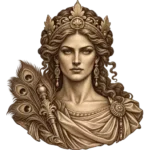 HeraDivine persecutor; later reconciled in apotheosis
 AthenaDivine helper in several labours
 HadesUnderworld ruler encountered during Cerberus labour
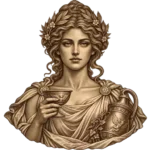 HebeDivine wife following apotheosis
 AresOpponent or combatant in a number of martial traditions
 ApolloAssociated with the Delphic command and divine gifts
 HermesDivine ally in adventure and underworld mythology
 ThanatosDeath wrestled in the Alcestis story
 PrometheusTitan liberated by Heracles in a well-known tradition
 AtlasTitan involved in obtaining the golden apples
A hero worshipped as a god
Heracles is unusual for being honored both as heroic ancestor and as a god in different settings. Ancient authors themselves noticed the distinction in sacrificial and ritual practice. It is inaccurate to imagine that every community saw him only as a fictional warrior or that all local cults applied one identical theological category.
Thebes, Tiryns and Argive traditions
Thebes claimed his birth and maintained important heroic and divine associations. Tiryns and the Argive area are central to the Eurystheus narrative and the labours. These places are not interchangeable: mythic biography and actual local religious identity overlap but do not perfectly coincide.
Athletes, gymnasia and public festivals
Heracles was especially visible among athletes and in gymnasium culture. Pausanias, Description of Greece 4.32.1, notes the honoring of Hermes, Heracles and Theseus in gymnasia and wrestling grounds. Public festivals and sacrificial rites made his cult part of embodied communal life.
Olympia and competing foundation stories
Pindar, Olympian 10, relates Heracles to the foundation or ordering of the Olympic festival, while Pausanias 5.7 preserves traditions concerning an earlier Idaean Heracles. The distinction matters: not every Heracles in an Olympic origin tale is automatically the son of Alcmene. Ancient cult stories can reuse the same heroic name in different genealogical settings.
Roman Hercules and wider Mediterranean cult
Romans worshipped Hercules as protector, guardian of strength, and patron in various civic and domestic contexts. His famous association with the Ara Maxima at Rome belongs to Roman cult history and should be treated as reception, not confused with a Greek sanctuary of the original Twelve Labours.
Sacred places and local traditions
Thebes in Boeotia
Thebes is the best-known mythic birthplace and one of the chief sites of Heracles’ local identity. Stories about Alcmene, Amphitryon and his family belong here. Ancient Theban cult was not simply a backdrop for the labours; it was a living tradition tied to the city’s sense of its own heroic past.
Tiryns and Mycenae
Eurystheus’ authority over Heracles is associated especially with the Argolid. In Pseudo-Apollodorus he serves in Tiryns. The landscape recalls the administrative and political logic of the labours: great strength is forced to act in another man’s service.
Nemea, Lerna and the Peloponnese
The lion of Nemea and Hydra of Lerna anchor the first labours in Peloponnesian geography; Erymanthus, Stymphalus and Elis add other concrete places. Some routes shifted across local tellings, so a map of the twelve adventures should not be presented as a single historically verifiable expedition.
Mount Oeta and the end of mortal life
Mount Oeta in central Greece is associated in important versions with Heracles’ funeral pyre. The site symbolizes the passage from heroic exhaustion and death to divine honor. Its ritual and literary importance lies in that crossing of categories.
Olympia, Gibraltar and mythical frontiers
Olympia anchors traditions about athletic foundation, while the Pillars of Heracles are identified with the far western entrance to the Mediterranean. The Hesperides’ garden and the underworld belong to more unstable or mythical geography. Distinguishing ancient pilgrimage sites from narrative destinations keeps the sacred landscape credible.
Pseudo-Apollodorus, Library 2.4–2.7
Library 2.4.8–2.4.12 addresses his birth and early crises; 2.5.1–2.5.12 presents the canonical labours and the contested counting of two tasks; 2.6–2.7 covers later adventures and family traditions. This is a later mythographic compilation, useful for systematic organization but not a complete representation of every ancient version.
Homer and Hesiod
Homer, Iliad 18.117–119, recalls even Heracles being unable to escape death; Iliad 19.95–133 develops Hera’s intervention in the birth and kingship rivalry. Homer, Odyssey 11.601–626, presents a famously complex underworld appearance. Hesiod, Theogony 950–955, reports the marriage of Heracles and Hebe among the immortals. These passages help expose traditions that differ in narrative emphasis.
Pindar, Sophocles and Euripides
Pindar, Olympian 10, connects Heracles to the Olympic games. Sophocles, Women of Trachis, narrates Deianira, Nessus, the fatal garment and the heroic end. Euripides, Heracles, stages his murderous madness with a chronology unlike that in Pseudo-Apollodorus. These tragedies are essential for understanding suffering and ethical cost, not merely the labours.
Pausanias, art and the cult record
Pausanias, Description of Greece 4.32.1, describes Heracles among gods honored in gymnasia; 5.7 preserves alternative Olympic foundation stories involving an Idaean Heracles. Vase painting, inscriptions, votives and shrines establish his material cult and artistic identity, supplementing literary accounts.
Editorial distinctions and limits
The list of twelve is traditional but not universally identical in all ancient sources; the chronology of his madness changes; final death and Olympian immortality coexist in differing genres. Hercules is the Roman continuation, not a separate Greek parentage. The main ancient basis for this profile is Pseudo-Apollodorus, Homer, Hesiod, Pindar, Sophocles, Euripides and Pausanias.