
Thanatos: God of Death, Peaceful Passing and Mortal Finality
Identity and scope
Thanatos (Θάνατος) is the Greek personification and god of death, especially the inevitable and often peaceful death that comes to mortals in due time. He is one of the most conceptually powerful figures in Greek religion because he stands at the boundary every human must eventually cross. Yet Thanatos should not be reduced to a vague grim abstraction or modern horror figure. In Greek thought, he is a divine presence associated with mortality, finality and the inescapable limit of human life. He is not simply the ruler of the underworld—that role belongs primarily to Hades—nor is he identical with every terrifying or violent form of death. His identity is more precise and more revealing.
Death as personified reality
The Greeks frequently personified powerful conditions of existence, and death was too important, intimate and universal not to receive divine form. Thanatos embodies the arrival of death itself. He represents the moment in which life ceases and the mortal condition is fulfilled. Because of this, he belongs to a group of dark yet fundamental powers that structure human existence without necessarily functioning as evil beings in a moral sense. To ancient Greek religion, death was terrible, inevitable and mourned, but it was also part of cosmic order.
Not the same as Hades
One of the most common modern confusions is to treat Thanatos as though he were simply another name for Hades or as the supreme ruler of the dead. That is incorrect. Hades governs the realm of the dead; Thanatos represents death itself as an event and power. This distinction matters because it clarifies why Thanatos appears in scenes of dying, corpse handling and the transition from life, while Hades belongs more to kingship over the underworld.
Peaceful death and darker counterparts
In many interpretations, Thanatos is linked more with ordinary or fated death than with the savage deaths of battle, plague or massacre. Those harsher forms may be represented by other beings such as the Keres. This contrast is useful because it shows that the Greeks could differentiate kinds of mortality. Thanatos is not pleasant, but he can appear as the necessary and even quiet completion of life rather than only as brutal destruction.
Name and modern legacy
The name Thanatos gave rise to the learned modern word “thanatology,” the study of death, and more broadly influenced modern discussions of mortality. This linguistic afterlife is noteworthy, but the historical deity must remain primary. Thanatos is not merely an etymological curiosity. He is a major mythological expression of the Greek attempt to imagine death as a divine certainty woven into the structure of life.

Death and the end of mortal life
Thanatos governs death itself, especially the cessation of mortal life. His domain is not the whole afterlife system in a broad administrative sense, but the arrival of death as a force or personified event. In this role he marks the irreversible passage from the living world to the state of the dead.
Inevitability and limit
More than almost any other figure, Thanatos represents limit. He is the reminder that mortal existence cannot escape its ending. This makes him conceptually central to Greek moral and tragic thought, where awareness of mortality often shapes wisdom, restraint and pathos. He does not create mortality from nothing; he embodies its unavoidable conclusion.
Peaceful or timely death
Greek tradition often treats Thanatos as the god of death in its expected or allotted form. That does not mean death is welcome, but it does suggest a difference between an ordinary or timely end and the horrifying violence represented by other dark beings. The contrast with the Keres is especially important in later interpretation.
Sleep-like transition and proximity to Hypnos
Because Thanatos is closely related to Hypnos, Sleep, he also belongs to a symbolic field in which sleep and death are neighbors. Ancient literature frequently exploits this proximity. Sleep can resemble a temporary withdrawal from the world; death is the permanent counterpart. This parallel does not erase their difference, but it gives Thanatos a peculiar stillness compared with more chaotic destructive forces.
Funerary passage and corpse conveyance
Thanatos may also appear in funerary or heroic imagery as a figure who carries, escorts or is associated with the body of the dead. In such contexts his power is not only abstract. He participates in the transition by which a fallen hero or mortal leaves the realm of the living. This makes him significant both in myth and in funerary imagination.
Winged youth
Thanatos is often represented in Greek art as a winged male figure, sometimes youthful rather than monstrous. This is an important corrective to many later modern images of death as a skeletal terror. The Greek Thanatos can be severe, mournful or solemn, but he is not necessarily grotesque. The wings signify swiftness, otherworldly movement and the transition of life away from the body.
Twin-like resemblance to Hypnos
Art and literature sometimes present Thanatos in close resemblance to Hypnos. The two brothers may appear together or in corresponding forms, reinforcing the conceptual closeness between sleep and death. Their similarity can be symbolically powerful: one draws the living into rest, the other into final stillness.
Extinguished torch
One of the most fitting symbols associated with death in classical imagery is the inverted or extinguished torch. While this is not exclusive to Thanatos, it aligns well with his symbolism because it represents life going out. The torch that no longer burns offers a concise visual metaphor for mortality fulfilled.
Sword or funerary gravity
Thanatos is not primarily a warrior god, but some imagery and later reception may give him severe attributes suggesting the cutting off of life. Even where no weapon appears, his bearing is often grave and composed rather than frenzied. He embodies necessity, not rage.
Carrying the dead
One of the most memorable visual functions of Thanatos is his participation in carrying or attending dead bodies, especially in heroic contexts. This iconography underscores that he is not merely a theological principle but a divine agent within the drama of mortal ending.
Child of Nyx
In Hesiodic tradition, Thanatos is one of the children of Nyx, Night, and belongs to a formidable family of personified forces. This genealogy is highly revealing. Death emerges not as a random accident but as one of the primal realities born from the deep structure of existence itself.
Brother of Hypnos
Thanatos and Hypnos are closely linked as brothers, often paired in poetry and art. This relationship is one of the most famous in Greek mythic symbolism. It expresses the intimate resemblance and radical difference between sleep and death: one temporary, one final.
Thanatos and Sarpedon in the Iliad
One of the most important Homeric scenes involving Thanatos appears in the Iliad, when Apollo is ordered to cleanse the body of Sarpedon, after which Sleep and Death carry the fallen hero back to Lycia for proper burial. In this scene Thanatos is not an abstract concept but an active participant in the dignified transfer of the dead. The passage is central for understanding his role in heroic and funerary imagination.
Heracles and Alcestis
Another famous myth places Thanatos in direct dramatic conflict with Heracles. When Alcestis dies in place of her husband Admetus, Heracles later wrestles with Thanatos and forces him to yield Alcestis back to the living. This story is remarkable because it stages death itself as an opponent who can, under extraordinary heroic conditions, be resisted. It highlights both Thanatos’ power and the exceptional status of heroic intervention.
Sisyphus and the binding of Death
In another important tradition, Sisyphus tricks and binds Thanatos, causing humans to stop dying for a time. The result is disorder, since the world cannot function properly if death ceases altogether. Eventually Thanatos is freed and the natural order restored. This myth is especially valuable because it makes explicit that death, however feared, is part of cosmic necessity. To suspend it is not liberation but disruption.
Thanatos and the Keres
Greek myth and later interpretation often distinguish Thanatos from the Keres, female spirits or powers associated with violent death, slaughter or doom. This distinction helps explain why Thanatos may be imagined with relative composure while the Keres embody bloodier and more horrific forms of dying. The contrast is interpretively important even if ancient sources do not always systematize it neatly.
Limited independent cult
Thanatos does not seem to have enjoyed a broad, prominent and panhellenic independent cult on the scale of gods like Apollo or Demeter. This relative scarcity is unsurprising. Death inspires awe, fear and necessity, but not always the same kind of expansive devotional cult as protective or beneficent Olympians. Nevertheless, the absence of a large cult network does not make him insignificant.
Presence in funerary religion
Thanatos is deeply important in funerary imagination, ritual consciousness and artistic representation. Even where temples or major festivals are limited, a divine figure can still be religiously meaningful. Thanatos belongs to the emotional and symbolic world of mourning, burial and reflection on mortality.
Heroic and ritual acknowledgement
Scenes in epic and myth show that death was acknowledged with ritual seriousness. Thanatos stands near that recognition. He belongs to the worldview in which the dead must be handled properly, burial matters and the boundary between life and death has religious significance.
Later philosophical and cultural presence
Thanatos becomes especially important in later literary, philosophical and symbolic traditions, even when direct cult evidence remains modest. The Greeks thought constantly about mortality, and a personified death god naturally occupied an enduring place in that reflection.
Fear without simple demonization
It is important not to impose a simplistic good-versus-evil framework on Thanatos. The Greeks could fear death intensely without treating Death as a devil. Thanatos is fearful because he is inevitable, not because he is morally wicked in a straightforward sense. This nuance matters for any accurate profile.
Absence of major panhellenic sanctuary
Unlike major Olympian gods, Thanatos is not defined by one famous panhellenic sanctuary that structures his identity. This absence itself is informative. It suggests that his religious presence was more diffuse, conceptual and funerary than temple-centered.
Funerary space and tomb imagery
Thanatos belongs strongly to tomb art, heroic death imagery and the symbolic geography of burial. Graves, funerary monuments and commemorative art are among the most meaningful “places” for understanding his sacred presence. This does not create a conventional sanctuary map, but it does anchor him in real ritual space.
Battlefield and the fallen hero
Heroic literature, especially the scene of Sarpedon, ties Thanatos to the geography of the battlefield and the journey home of the dead. He is relevant wherever the dead body must be honored, returned or properly integrated into funerary rites.
Underworld threshold
Although Thanatos is not identical with the underworld’s ruler, he naturally belongs to the threshold leading toward that realm. His sacred geography is therefore transitional: the edge between life and death rather than the kingship of the dead itself.
Later symbolic spaces
In later reception, Thanatos’ presence expands into literature, philosophy and art concerned with mortality. These are not ancient sanctuaries, but they show how strongly his figure inhabits symbolic and imaginative space long after direct cult becomes difficult to trace.
Nyx
Nyx, Night, is the most important mother assigned to Thanatos in major Greek tradition. This relationship situates him among primordial and unavoidable powers rather than among the bright Olympian line in the usual sense. It contributes greatly to his gravity.
Erebus and dark genealogical context
Through broader dark genealogical frameworks, Thanatos may be associated with Erebus as part of the shadowed cosmic lineage surrounding Nyx. Even when not highlighted equally in every source, this context helps locate him within a family of deep, chthonic realities.
Hypnos
Hypnos is Thanatos’ most important sibling and conceptual counterpart. Their pairing is famous, profound and indispensable. No strong account of Thanatos should separate him from this fraternal relationship.
The Keres
The Keres are not always described simply as siblings in every source, but they belong to the same dark mythic world of death and doom. Comparing them with Thanatos helps clarify the Greek differentiation between ordinary death and violent destruction.
Hades
Hades is not Thanatos’ father or master in a simple genealogical way, but he is an essential comparison. Hades rules the dead; Thanatos brings death. Their distinction prevents a major modern misunderstanding.
Sisyphus, Heracles and Alcestis
Sisyphus, Heracles and Alcestis are not family relations, yet they are among the most important mythic figures connected with Thanatos. Sisyphus temporarily binds him, Heracles wrestles him and Alcestis is recovered from his claim. Their stories are indispensable for understanding how Greek myth dramatizes resistance to death.
Thanatos and Mors
The closest Roman equivalent of Thanatos is Mors, the personification of death. This equivalence is broadly useful, though Greek and Roman traditions do not always overlap perfectly. Both figures represent death personified rather than the full administration of the underworld.
Thanatos and death as concept
Because the Greek word thanatos can mean death itself, readers must distinguish between the common noun and the divine figure. Ancient texts may use the term in different registers, and not every occurrence is necessarily a theological invocation of the god. The ambiguity, however, is part of what gives the figure power.
Modern thought and the language of death
The name Thanatos has had a long modern afterlife, appearing in philosophy, psychology and scholarly vocabulary surrounding death. These later uses are important reception history, but they must not eclipse the mythological figure at their source. The Greek god came first; later abstraction grew out of his name and symbolic field.
Not a simple grim reaper
Modern audiences sometimes project the medieval or modern “grim reaper” image backward onto Thanatos. This is misleading. Thanatos can be solemn and fearsome, but his classical profile is not identical with the hooded skeleton of later Western imagery. Greek art often presents him as winged, youthful and severe rather than skeletal.
Primary ancient sources
Hesiod, Theogony, for Thanatos as a child of Nyx and member of a dark personified family; Homer, Iliad, for the carrying of Sarpedon by Sleep and Death; Euripides, Alcestis, for the confrontation between Heracles and Thanatos; mythographic traditions on Sisyphus binding Death; and funerary and vase-painting evidence for iconography and symbolic function.
Interpretive note
Thanatos is best understood at the intersection of religion, mortality, funerary imagination and mythic symbolism. He is neither merely an abstraction nor simply a villain. He personifies the unavoidable completion of mortal life, stands near sleep through Hypnos, and reveals the Greek effort to give form to one of existence’s most universal limits.
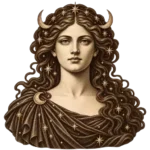 NyxMother in major genealogical tradition
 ErebusPart of his broader dark genealogical context
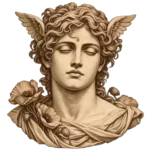 HypnosBrother and closest mythic counterpart
 HadesRelated underworld deity often confused with Thanatos
 HeraclesHero who wrestles Thanatos in the Alcestis myth