
Erebus: Primordial Darkness, Shadowed Depth and the Ancient Gloom Beneath Creation
Identity and scope
Erebus (Ἔρεβος) is the Greek primordial power of deep darkness, shadowed gloom and the obscure region associated with the lower cosmic depths. He belongs to the earliest strata of Greek cosmology, far older than the Olympian gods and even older than the Titan generation. In mythic terms, Erebus is not simply “darkness” in a poetic or decorative sense. He is a living primordial condition: the heavy, tenebrous obscurity from which later forms of order and visibility are differentiated.
A being of primordial rather than late mythology
To understand Erebus properly, one must place him in the opening architecture of Greek myth. In Hesiodic cosmology he emerges close to the beginning of existence itself, among the great first realities that structure the world before the divine order becomes fully articulated. This places him among entities such as Chaos, Gaia and Nyx rather than among later civic gods. Erebus is part of the cosmic foundation, not a secondary atmospheric figure.
Darkness with depth and location
Unlike Nyx, who embodies Night in a broad and enveloping sense, Erebus often suggests a deeper and more interior darkness. Ancient usage can refer both to the primordial deity and to a shadowy region connected with the underworld or lower gloom. This double function is one of the most important aspects of the figure. Erebus is both a being and a realm-like condition, a personified obscurity and the shadowed depth through which the world’s lower realities are imagined.
Partner of Night and father of brightness
One of the most striking paradoxes of Greek cosmology lies in Erebus’ union with Nyx. From Darkness and Night arise Aether and Hemera, brightness and Day. This is not a contradiction, but a sign of mythic reasoning: light is born out of darkness, and cosmic differentiation proceeds through the tension and succession of opposites. Erebus therefore participates not only in obscurity, but also in the generative logic by which the visible world emerges.
Solemnity rather than spectacle
Erebus is not usually a mythological figure of dramatic heroic adventures. His importance is theological, cosmological and symbolic. He belongs to those ancient powers whose presence is felt through genealogy, atmosphere and metaphysical weight rather than through a long sequence of personal exploits. That does not make him minor. On the contrary, it makes him foundational.

Primordial darkness
Erebus governs darkness in its deeper, heavier and more obscure dimension. This is not simply the ordinary darkness of evening, but the tenebrous depth that exists beneath or behind visible order. He represents the thick gloom from which forms, boundaries and illumination stand out.
Shadowed depth and underworld resonance
Ancient texts sometimes use Erebus not only as the name of a primordial being but also for a gloomy underworld region. This means his domain includes the resonances of lower-world obscurity, hidden passage and chthonic depth. He stands near the threshold where cosmological darkness shades into the geography of the dead.
Cosmic concealment and invisibility
Erebus belongs to hiddenness, invisibility and the withdrawal of clear sight. Where daylight and aether reveal, Erebus conceals. This does not make him automatically malicious. Rather, he embodies one of the indispensable conditions of existence: that not everything is exposed, clarified or accessible.
Generative darkness
Although darkness may seem merely negative, Erebus is part of a generative cosmic pattern. In union with Nyx, he gives rise to Aether and Hemera. This indicates that darkness in Greek myth can be fertile, preceding and enabling the arrival of luminosity. Erebus is therefore not mere absence; he is productive obscurity.
Solemnity, fear and metaphysical gravity
The atmosphere around Erebus is one of seriousness rather than spectacle. He carries gravity, not flamboyance. Fear may accompany him, but it is the fear of depth, obscurity and primordial otherness, not merely fear of attack or violence. He is one of the mythic names for the fact that reality contains darkness older than conscious life.
Dark masculine or shadowed primordial presence
When personified, Erebus may be imagined as a dark and solemn male figure, but ancient myth does not depend on one narrow visual type. His imagery tends toward presence rather than sharply fixed iconographic detail. He is often better evoked through atmosphere—gloom, shadow and lower darkness—than through richly individualized portraiture.
Mist, darkness and obscured outlines
Symbols suited to Erebus include heavy shadow, black mist, deep cave-darkness and forms half-lost in obscurity. These motifs communicate not just lack of light, but the density of hidden space. Erebus is less a figure standing in darkness than darkness itself assuming divine identity.
Cavernous and underworld-associated imagery
Because the name Erebus can also refer to a gloomy underworld region, cave imagery, chthonic depths and shadowed passages suit him well. These are not always formal cult symbols in the strict sense, but they capture the spatial quality of his mythic identity.
Contrast with Aether and Day
A useful way to imagine Erebus is through contrast: where Aether is brightness and Hemera is Day, Erebus is the dense opposite from which they emerge. This contrast itself functions symbolically. Ancient cosmology defined powers not merely in isolation, but in relation to their counterpart conditions.
Primordial dignity rather than monstrous excess
Erebus need not be represented as a monster. Like many primordial entities, he is more awe-inspiring when treated with severe dignity. He is ancient gloom personified, not simply a creature of horror. His iconographic power lies in restraint, depth and the sense of a reality older than gods of civilization.
Erebus in Hesiod’s cosmogony
In Hesiod’s Theogony, Erebus appears among the earliest primordial powers. His place near the beginning of creation establishes him as a foundational figure in Greek thought. He is part of the first structure of reality rather than a later local or narrative deity.
Union with Nyx
Erebus is most importantly paired with Nyx, Night. Their union is one of the defining relationships in early Greek cosmology. Together they produce Aether and Hemera, creating a cosmological sequence in which obscurity and night give rise to brightness and day. This is one of the clearest demonstrations of Greek myth’s tendency to explain the world through generative oppositions.
Birth of Aether and Hemera
Aether, the bright upper air, and Hemera, Day, are among the most significant offspring of Erebus. Their birth gives Erebus a crucial role in the emergence of a world that is not entirely concealed. He is therefore embedded in a larger story of cosmic differentiation from hiddenness to visibility.
Erebus as underworld gloom
In later literary usage, the name Erebus can denote the gloomy depths of the underworld. This does not erase the primordial deity; rather, it extends the meaning of the figure. Erebus becomes both a god and a mythic region, a darkness below and beyond ordinary human life.
Indirect relation to the children of Nyx
Because Nyx gives birth to many personified powers in Hesiod, Erebus stands near an extended dark family of forces such as Hypnos, Thanatos, Moros, Nemesis and Eris. Sources differ on whether these are to be treated as children of Nyx alone or of the dark pair more broadly, so precision matters. Erebus should not be assigned paternity mechanically in every case, but his proximity to that lineage is mythologically important.
Later metaphysical and poetic afterlife
Greek and Roman poets, philosophers and mythographers continued to use Erebus as a powerful name for deep darkness, infernal shadow and archaic obscurity. His afterlife demonstrates that primordial figures can remain culturally significant even when they do not dominate narrative myth in the manner of the Olympians.
Little evidence for broad civic cult
Erebus does not appear to have enjoyed a broad public cult comparable to the worship of Olympian gods. This is unsurprising. Primordial cosmic powers were often central to mythological explanation without receiving the same large-scale civic devotion as gods tied to polis life, warfare or agriculture.
Mythic importance beyond temple prominence
The absence of extensive temple networks does not diminish Erebus’ significance. Some powers in Greek religion mattered above all as parts of cosmology, ritual atmosphere and sacred language. Erebus belongs very strongly to this class. He is important because he explains the universe’s hidden side.
Chthonic and symbolic religious environment
Even if direct cult evidence is limited, Erebus belongs naturally to a religious environment shaped by underworld symbolism, nocturnal thinking and respect for primordial forces. Ritual settings concerned with death, darkness or hidden divine powers provide a broader symbolic context for understanding his sacred significance.
Poetic and theological invocation
Erebus survives most vividly in theological and poetic discourse. Mythographers and poets invoke him to mark the archaic depth of darkness or the solemnity of underworld descent. This literary-sacred role is an important mode of religious presence, even without extensive evidence of daily worship.
Reverence through cosmological seriousness
Erebus inspires a form of reverence rooted in seriousness rather than intimacy. He is not a familiar helper god but a power acknowledged through cosmological reflection and symbolic force. His “cult,” in the broadest sense, is expressed through the enduring respect paid to darkness as part of sacred order.
No dominant panhellenic sanctuary
There is no famous panhellenic sanctuary that uniquely defines Erebus. This fits his nature. He is a primordial condition more than a place-bound civic deity. His sacred importance is cosmological rather than concentrated in a single monumental center.
Underworld and chthonic geography
The most natural “place” associated with Erebus is the shadowed underworld or the lower cosmic gloom evoked in poetry. Even when this is more literary than archaeological, it is central to his identity. Erebus belongs wherever hidden depth and death-adjacent darkness are imagined.
Caves, depths and concealed spaces
Caves, ravines, subterranean spaces and deeply shaded places fit Erebus’ symbolic geography. Such spaces embody enclosure, obscurity and descent. They do not need to be formal temples to function as appropriate sacred environments for a primordial darkness-being.
The world beneath visible order
More abstractly, Erebus inhabits the region beneath ordinary visibility—what lies under, before or beyond the clear world of daylight. This conceptual “place” is vital, because primordial figures often possess geography that is metaphysical as much as physical.
Shared sacred sphere with Nyx and lower powers
Since Erebus is closely connected with Nyx and with the broader dark lineage of sleep, death and doom, he participates in a symbolic sacred sphere rather than an isolated local shrine. His geography is a network of darkness, depth and liminality.
Chaos
Chaos is one of the essential primordial antecedents within the Hesiodic ordering of reality, and Erebus belongs near this first level of being. Understanding Erebus requires placing him close to the beginning of creation rather than within later divine generations.
Nyx
Nyx is Erebus’ most important counterpart and consort. Their union is one of the defining pairings of early Greek cosmology and explains the birth of Aether and Hemera. Together they embody how darkness and night operate both separately and in conjunction.
Aether
Aether, the bright upper air, is among the most important children of Erebus and Nyx. His birth emphasizes the paradoxical fertility of darkness. Erebus is not sterile obscurity but a generative primordial condition.
Hemera
Hemera, Day, is another crucial child of Erebus and Nyx. Her emergence from darkness and night illustrates the rhythm by which cosmic alternation becomes possible. Day is not independent of darkness; it is born from it.
Hypnos and Thanatos
Erebus stands near the larger family of dark powers associated with Nyx, including Hypnos and Thanatos. Caution is needed, because not every source gives Erebus equal parental status for each descendant. Still, these figures belong to the same symbolic household of shadowed realities.
Moros, Nemesis and Eris
Moros, Nemesis and Eris likewise belong to the extended dark lineage connected with Nyx and, by proximity, with Erebus. Their presence deepens the theological significance of this primordial family: darkness is tied to doom, retribution and conflict not as moral simplification, but as a mythic map of existence.
Erebus in Greek and Roman usage
Unlike some deities with straightforward Roman equivalents, Erebus often passes directly into Latin literature under the same or closely related name. Roman authors could use “Erebus” not only as a mythic being but also as a poetic designation for infernal gloom or the underworld depths.
Deity and region
A major interpretive issue with Erebus is that the name can designate both the primordial god and a place-like region of darkness. This dual function is not a problem to be removed but a key part of the concept. Ancient myth regularly allows primordial beings to become cosmic spaces or conditions.
Not identical with Night
Erebus should not be collapsed into Nyx. The two are related and closely paired, yet they are not identical. Nyx is Night; Erebus is the darker, deeper obscurity often linked to the shadowed lower realm. Their distinction enriches Greek cosmology.
Not simply “evil darkness”
Modern habits often moralize darkness too quickly. Erebus is not a devil figure or a one-dimensional embodiment of evil. He is primordial gloom, sacred obscurity and the hidden depth of the cosmos. His significance is metaphysical before it is moral.
Primary ancient sources
Hesiod’s Theogony for Erebus’ primordial role, union with Nyx and parenthood of Aether and Hemera; Homeric and later poetic usage for Erebus as deep infernal or underworld gloom; and wider mythographic tradition for the continued symbolic life of Erebus in Greek and Roman thought.
Interpretive note
Erebus is best understood as one of the foundational darkness-powers of Greek cosmology. He is both a primordial being and a region-like condition, both hidden depth and generative obscurity. His mythology shows that darkness in the Greek imagination is not merely negation, but a sacred and formative dimension out of which the visible world emerges.
 ChaosPrimordial antecedent within the earliest ordering of the cosmos
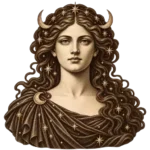 NyxConsort and closest cosmological counterpart
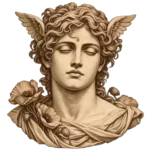 HypnosPart of the broader dark family closely associated with Nyx and Erebus
 ThanatosPart of the broader dark family closely associated with Nyx and Erebus
 NemesisPart of the extended dark lineage surrounding Nyx and Erebus
 ErisPart of the extended dark lineage surrounding Nyx and Erebus