
Eris: Goddess of Strife, Discord and Destructive Rivalry
Identity and significance
Eris is the Greek goddess most closely associated with strife, discord, contention and the kind of conflict that can grow from rivalry into open destruction. She is one of those divine figures whose importance is far greater than the amount of space she sometimes receives in simplified retellings. Eris embodies not only fighting in a physical sense, but the more subtle and dangerous forces that precede it: envy, competition, quarrel, resentment, provocation and division. Through her, Greek mythology gives divine form to the truth that conflict often begins long before swords are drawn.
Not merely chaos for its own sake
Modern summaries sometimes reduce Eris to a one-note “goddess of chaos,” but that is too vague and often misleading. Eris is specifically tied to strife and discord, to the fracturing of harmony and the intensification of antagonism between individuals, families and even gods. She is not random disorder in the abstract. She is the force by which relationships sour, alliances crack and competition turns poisonous. Her sphere is social, moral and political as much as martial.
A figure with more than one tradition
Eris also matters because Greek literature presents more than one way of thinking about strife. In Hesiod’s Works and Days, the poet distinguishes between two forms of Eris: one blameworthy and destructive, another productive in the sense that rivalry can spur work, effort and improvement. This makes Eris more intellectually interesting than a flat personification of evil. Greek thought recognized that conflict can be ruinous, but that competition can also energize human action.
The spark behind famous myths
Eris is especially famous for her role in the mythic chain leading to the Trojan War. Through the golden apple episode, later tradition makes her the provocateur whose insult and retaliation help set in motion one of the most consequential wars in Greek mythology. In this way, Eris is not just a passive abstraction. She is the spark that reveals how wounded pride and competitive vanity can destroy whole civilizations.
Why Eris matters
Eris matters because she exposes an uncomfortable truth about divine and human life alike: conflict is often born from comparison, grievance and the refusal to yield. Greek mythology does not imagine discord as an external accident alone. It gives discord a goddess, which means strife is woven deeply into the structure of existence and society.

Strife and discord
Eris rules over strife in the broadest but also most precise Greek sense: quarrel, contention, antagonism and divisive conflict. She is the force that disrupts peace and pushes relationships toward hostility.
Rivalry, envy and provocation
Her domain includes competitive jealousy, insult, status rivalry and the resentments that escalate disputes. This makes Eris especially relevant wherever contests of prestige, beauty, power or honor become destructive.
War’s emotional and social preconditions
Eris is not identical with Ares. Ares represents war’s violence and fury more directly, while Eris often represents the tension that leads to conflict or accompanies it: the bitterness, hostility and provocation that prepare the way for open struggle.
The double nature of strife in Hesiod
Hesiod’s distinction between two Erides deepens her domain. One kind of strife is condemnable and ruinous; the other can stimulate labor and competition. This does not transform Eris into a benign goddess, but it shows that Greek thought understood rivalry as morally complex.
Social fracture and moral corrosion
Eris belongs to the unraveling of community. Through her, friends become enemies, families fall into dispute and cities move toward division. Her sphere includes not only battle but the moral corrosion that makes conflict contagious.
Dark, fierce and unsettling feminine presence
Eris is often imagined as a severe or ominous goddess, not necessarily monstrous, but charged with a hard, dangerous intensity. She may appear beautiful in a severe way, yet her beauty is edged with hostility rather than grace.
The golden apple of discord
The most famous symbol associated with Eris in later tradition is the golden apple inscribed “for the fairest,” which she throws among the goddesses after being excluded from a wedding feast. This object captures her mythic logic perfectly: a small provocation with enormous consequences.
Battle imagery and torn social order
In epic imagination, Eris may be visualized amid battle, quarrel or tumult, reflecting her closeness to conflict. Yet her imagery can also be more subtle: the expression of grievance, the gesture of accusation or the presence that turns tension into open rupture.
Companionship with warlike powers
She is sometimes associated in poetry with grim powers that move through battle or suffering. This makes symbols of strife, uproar and division appropriate to her, even if she lacks a single rigid iconographic program.
No fixed universal iconography
As with many personified or semi-personified Greek powers, Eris does not possess one universally standardized ancient iconography comparable to Athena’s helmet or Apollo’s lyre. Her identity is conveyed more by narrative function and symbolic association than by one fixed visual formula.
Daughter of Nyx in Hesiod
In Hesiod’s Theogony, Eris is usually presented as a daughter of Nyx, Night, placing her among a dark and morally charged set of personified powers. This genealogy is significant because it frames strife as one of the troubling forces woven into existence from an early cosmic level.
The children of Eris
Hesiod also attributes to Eris a series of personified offspring, including Ponos, Lethe, Limos, Algos, Hysminai, Makhai, Phonoi, Androktasiai, Neikea, Pseudea, Logoi, Amphillogiai, Dysnomia, Ate and Horkos. These children make her role especially vivid. Eris is not an isolated principle; she generates a whole family of suffering, violence, deceit and social breakdown.
The two Strifes in Works and Days
One of the most interesting developments in Greek thought comes when Hesiod, in Works and Days, distinguishes between two kinds of Strife. One is destructive and hateful, while the other encourages emulation, effort and labor. This passage does not erase Eris’ dangerous character, but it complicates the Greek understanding of competition and conflict.
The golden apple and the Judgment of Paris
In later mythic tradition, Eris is excluded from the wedding of Peleus and Thetis and responds by throwing a golden apple marked “for the fairest.” Hera, Athena and Aphrodite each claim it, leading Zeus to refuse judgment and Paris to choose among them. His decision in favor of Aphrodite becomes one of the steps that leads to the Trojan War. Here Eris acts less by brute force than by exposing vanity, rivalry and fragile honor among the gods.
Eris in Homeric war imagery
In Homer, Eris appears as a force associated with battle, swelling violence and the atmosphere of conflict. This epic portrayal emphasizes her closeness to warfare, not merely as slaughter itself, but as the dark momentum that magnifies human struggle.
Discord as a cosmic and social truth
Eris does not need long heroic adventures of her own to matter. Her myths show that discord may work through provocation, insult, competition and the multiplication of hostile consequences. She is effective precisely because she often acts indirectly, setting others against one another.
Limited evidence of major cult
Eris was not a major recipient of civic worship in the same sense as Athena, Apollo or Demeter. This is unsurprising, since deities associated with destructive forces often occupied a more ambivalent religious place.
Religious logic of appeasement and acknowledgment
Even without strong evidence for broad cult, Eris belonged to the Greek religious imagination as a real divine force whose presence had to be recognized. Powers of suffering, ruin or contention were not always beloved, but they could not be ignored.
Mythic and moral significance over public devotion
Her importance lies primarily in myth, epic and moral thought. Eris explains the origins and escalation of conflict in ways that became central to Greek reflection on war, honor and human weakness.
Presence in literary religion
Poets preserved Eris vividly because she helped articulate the emotional and ethical dimension of conflict. Through literature, her presence remained culturally potent even where temple worship was limited.
Conceptual endurance
Eris endured because every society understands discord. Greek religion gave that reality a goddess, ensuring that Eris remained meaningful as an explanatory and symbolic force long after specific cult details faded from view.
No broad network of famous temples
There is no major surviving record of a widespread temple network dedicated to Eris. This fits her profile as a feared or morally troubling personification rather than a civic patron deity.
The wedding of Peleus and Thetis as symbolic setting
The wedding feast from which Eris is excluded becomes one of her most important symbolic locations. It represents the threshold where insult becomes catastrophe and where social celebration turns into rivalry and war.
The battlefield as her natural landscape
In epic terms, Eris belongs naturally to the battlefield, the assembly in crisis and the spaces where anger and competition intensify. Her sacred geography is therefore often symbolic and experiential rather than architectural.
Troy and the chain of discord
Although not a sanctuary in the cultic sense, Troy becomes inseparable from Eris’ mythic legacy because the apple episode contributes to the chain of events leading to the war. Through Troy, her influence extends from Olympus into human history.
Social space as sacred space of strife
More abstractly, Eris inhabits the contested spaces of human life: courts, councils, feasts, households and battle lines. Wherever rivalry erupts into division, her presence is felt.
Nyx
In Hesiodic tradition, Nyx is Eris’ mother. This ancestry places Eris among a family of dark and morally charged powers that emerge from Night.
Children of conflict and suffering
Eris’ children in Hesiod include personifications such as Ponos, Lethe, Limos, Algos, Hysminai, Makhai, Phonoi, Neikea, Pseudea, Logoi, Amphillogiai, Dysnomia, Ate and Horkos. These descendants are crucial for understanding the breadth of her domain.
Ares and warlike association
Although not usually a close genealogical relation, Eris is often associated with Ares in thematic terms because both belong to the world of conflict. The difference is important: Eris provokes and multiplies discord, while Ares embodies war’s direct ferocity.
Peleus, Thetis and the apple episode
Peleus and Thetis matter to Eris because their wedding becomes the stage for her most famous intervention. Through that episode she enters the broader mythic chain of the Trojan War.
Hera, Athena, Aphrodite and Paris
These figures become central to the apple story. Eris does not merely quarrel herself; she sets others into rivalry, showing that her power often works by catalyzing competition in others.
Eris and Discordia
The Roman counterpart most commonly associated with Eris is Discordia. The equivalence is useful, though each figure carries the nuances of its own literary and cultural setting.
Not identical with Ares
Eris should not be confused with Ares. The two overlap through war, but Eris is more specifically discord, hostility, quarrel and rivalry, whereas Ares represents the violence and fury of battle itself.
The double Eris in moral interpretation
Hesiod’s distinction between two forms of strife gives Eris an unusual moral complexity. This makes her relevant not only to myth but to ethical reflection on whether competition destroys or motivates.
From myth to psychology and politics
Later interpretation easily reads Eris as a symbol of social polarization, factionalism and interpersonal resentment. These are later applications, but they fit the ancient logic of her power very well.
Primary ancient sources
Hesiod’s Theogony for Eris as daughter of Nyx and mother of many personified powers of suffering and conflict; Hesiod’s Works and Days for the distinction between two forms of Strife; Homeric passages, especially in the Iliad, for Eris as a force of battle and discord; and later mythographic tradition for the golden apple and the events leading to the Judgment of Paris and the Trojan War.
Interpretive note
Eris is best understood as the goddess of strife, discord and corrosive rivalry, but also as a figure through whom Greek thought explored the complexity of competition itself. She is both destroyer of harmony and revealer of how fragile social order can be when pride and resentment are stirred.
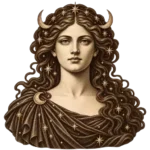 NyxMother in Hesiodic genealogy and source of Eris’ dark lineage
 AresWarlike counterpart associated with conflict, though distinct in function
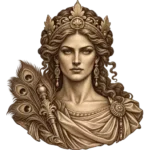 HeraOne of the goddesses drawn into rivalry by the golden apple
 AthenaOne of the goddesses who contests the apple of discord
 AphroditeOne of the goddesses in the apple contest and eventual winner in Paris’ judgment
 ZeusRefuses to settle the apple dispute and sends the judgment onward