
Pan: Wild God of Shepherds, Mountains and Sudden Fear
Identity and scope
Pan (Πάν) is one of the most distinctive divinities of Greek mythology and religion. He is usually recognized as a rustic god with the legs and horns of a goat, associated with shepherds, flocks, mountains, caves, music and untamed landscapes. Yet Pan is more than a charming pastoral figure. He embodies the unsettling vitality of the wild, the fertility of herds, the erotic force of nature, the exhilaration of lonely places and the sudden terror that can seize humans and animals alike. Greek religion placed Pan not at the polished center of civic order, but in the rough threshold where the civilized world meets forests, cliffs, ravines and grazing land.
Arcadian roots and wider spread
Pan was especially associated with Arcadia, a region of mountains, shepherding and rustic cults. Ancient Greeks often treated Arcadia as his natural homeland, and many of the god’s oldest and strongest traditions come from there. Over time, however, his worship moved beyond Arcadia and became important in other parts of Greece, especially after the Persian Wars, when Athenians honored him more publicly. This history matters because Pan is often imagined as only a local rustic deity, when in fact he achieved broad symbolic reach in Greek religious and cultural life.
A god of liminal spaces
Pan belongs to places that are neither fully domestic nor entirely alien: pastures, caves, mountain paths, forest clearings and midday stillness. He protects shepherds and flocks, but also startles wanderers. He plays music, dances with nymphs and pursues erotic desire, yet he can also bring disorientation and dread. These features make him a liminal god, one who governs thresholds between safety and exposure, joy and fear, culture and nature.
Name, etymology and caution
The name Pan has often been associated since antiquity with the Greek word pan, meaning “all,” which encouraged philosophical and symbolic interpretations of the god as a universal nature-power. Most scholars, however, are cautious about treating this as a secure linguistic derivation. What is certain is that later Greek and especially post-classical thought loved this association and built large symbolic readings upon it. A responsible profile should distinguish poetic or philosophical interpretation from strict etymological certainty.
Pan and the origin of “panic”
One especially valuable cultural detail is that Pan is associated with the origin of the idea behind the word “panic.” Ancient Greeks believed the god could send sudden irrational fear, especially in lonely wild places or during abrupt disturbances in battle or among herds. From this association developed the later concept that became “panic.” This is precisely the kind of historical-linguistic legacy that shows how myth can survive in modern vocabulary.

Pastoral life and shepherding
Pan is above all a god of shepherds, goat-herds and the rural labor of tending animals. He watches over flocks, grazing land and the practical world of herding. This pastoral role makes him one of the most grounded and occupationally specific deities in Greek religion. He was not an abstract symbol to those who invoked him, but a power relevant to daily work in the countryside.
Wilderness, mountains and caves
Pan belongs to the uncultivated world: rocky slopes, forests, ravines, caves and mountain routes. Unlike Demeter, who governs cultivated fertility, Pan expresses the untamed vitality of nature. His landscape is rugged rather than agricultural, spontaneous rather than orderly. This connection to rough terrain explains much of his visual and emotional character.
Music, pipes and dance
Pan is strongly associated with rustic music, especially the syrinx or pan flute. Music in his sphere is not the measured aristocratic art of Apollo’s lyre, but a more immediate and bodily sound linked to breath, reeds, desire and movement. Dance, pursuit and festive exuberance often accompany this dimension of his power.
Erotic pursuit and fertility
Pan is often portrayed as a god of intense erotic desire. His myths repeatedly show him pursuing nymphs or rustic maidens, usually without success. These stories are not flattering in a modern moral sense, but they belong to the ancient representation of Pan as an untamed fertility force. His sexuality is impulsive, comic, disturbing and inseparable from his wild identity.
Sudden fear and disturbance
Pan can send abrupt terror, the kind of irrational fear that seizes a group, a traveler or a herd without warning. This capacity gives him a darker power beyond fertility and merriment. The later word “panic” preserves the memory of this divine function. Pan’s fear is not the organized martial dread of Ares’ children Phobos and Deimos; it is more sudden, contagious and naturalized.
Hybrid body
Pan is one of the most visually recognizable gods of the Greek world because of his hybrid form. He is commonly depicted with the torso and face of a man but with goat legs, hooves, horns and often a beard. This bodily mixture marks him as neither fully human nor fully animal. It communicates his identity as a divinity of the threshold between civilized humanity and untamed animal vitality.
The syrinx or pan flute
The syrinx is Pan’s most famous attribute. It derives from the myth of the nymph Syrinx, who was transformed into reeds to escape him. Pan cut the reeds and fashioned the instrument from them. The syrinx therefore unites desire, loss, transformation and music in one symbol, making it especially rich for interpreting Pan.
Shepherd’s crook and rustic implements
Pan may also carry a shepherd’s staff, lagobolon or other rustic tools. Such attributes remind us that he is not only a symbolic wilderness force but also a god of practical pastoral life. His iconography remains grounded in the everyday world of herding.
Goats, hares and rustic animals
Goats are the animals most strongly associated with Pan, but other rural or wild creatures can appear with him. The goat linkage is especially significant because it informs both his hybrid body and his erotic-fertility symbolism. Pan’s world is alive with animal motion and instinct.
Companions and rustic setting
In visual art, Pan often appears with nymphs, satyrs, Dionysian companions or in cave settings. These contextual elements help situate him within a broader world of rustic divinity, music, pursuit and ecstatic natural energy.
Birth traditions
The parentage of Pan varies by source. One common tradition makes him the son of Hermes and a daughter of Dryops, while other accounts give different mothers or even different fathers. This instability is important. Pan is a god whose local traditions were numerous, and any responsible profile must report variation instead of pretending there is a single universally fixed genealogy.
The reaction to his birth
Some myths emphasize that Pan’s goat-like appearance startled or frightened his mother at birth, while Hermes took delight in the unusual child and carried him to Olympus, where the gods rejoiced. This story captures an important tension in Pan’s identity: what is strange or frightening in one context becomes delightful, powerful or divine in another.
Pan and Syrinx
The most famous myth of Pan concerns his pursuit of the nymph Syrinx. As he chases her, she calls for help and is transformed into reeds. Pan, hearing the wind through them, fashions the syrinx or reed flute. The tale is central because it explains his instrument, links erotic frustration to music and shows how Pan’s desire often ends not in union but in metamorphosis.
Pan and Echo
Some later traditions connect Pan with the nymph Echo, either as pursuer or as figure linked to her fragmented voice. These stories vary and are not as central as Syrinx, but they reinforce Pan’s connection to sound, pursuit and the uncanny qualities of landscape.
Pan and the Battle of Marathon
One historically important narrative says that Pan aided the Athenians, or at least promised favor, in connection with the Battle of Marathon. According to Herodotus, the runner Philippides encountered Pan, who questioned why the Athenians did not honor him. After the Persian defeat, the Athenians established cultic honors for Pan. This episode is important because it shows Pan moving from Arcadian rusticity into Athenian civic memory.
Daphnis and rustic song
Later pastoral traditions connect Pan with figures such as Daphnis and with the broader world of bucolic poetry. These traditions are especially significant for Pan’s literary afterlife, even when they belong to later poetic development rather than the earliest mythic layer.
Arcadian cult
Pan’s worship had strong roots in Arcadia, where rustic shrines, caves and mountain settings suited his divine identity. Arcadian religion treated him as a real protector of herdsmen and flocks, not simply as a literary curiosity. This local depth is essential to understanding the god.
Cave worship and simple sanctuaries
Unlike deities defined primarily by monumental temples, Pan was often worshipped in caves, grottos and natural sanctuaries. These cult places match his character. His sacred space is frequently rough, natural and embedded in the landscape itself.
Athens and post-Marathon honors
After Marathon, Athenians gave Pan a more formal place in civic religion. A cave sanctuary on the north slope of the Acropolis became especially associated with him. This Athenian reception did not erase his rustic identity, but it did show how a local mountain god could be integrated into wider Greek public life.
Rural music and festivities
Because Pan was linked to pipes, herding and rustic pleasure, his worship naturally included musical and festive elements. These celebrations were not necessarily orderly in the same way as more urban cults. They belonged to the emotional world of countryside life, where fear and joy stood near each other.
Pan in Hellenistic and later religion
Pan’s figure expanded in meaning over time. He became important in pastoral poetry, art and later symbolic thought. In some later settings he appears almost as an emblem of nature itself. Even so, his origins in specific Greek cult and myth should not be forgotten beneath broader philosophical interpretations.
Arcadia
Arcadia was Pan’s sacred heartland. Mountains, shepherding zones and rustic sanctuaries across the region preserved his identity most strongly. To speak of Pan without Arcadia is to miss the landscape that shaped his religious character.
Mount Lykaion and rustic mountains
Although Pan was not confined to one single mountain, Arcadian heights such as Mount Lykaion belong to the broader environment of rustic divinity in which he flourished. Such settings help explain why the god is so closely tied to mountain wildness.
Caves of Arcadia
Caves were among Pan’s most natural sacred places. They functioned as shrines, shelters and liminal spaces in which the god could be imagined as present. Their darkness and natural acoustics also suit his association with fear and with reed music.
The cave of Pan at Athens
Athens honored Pan in a cave on the north slope of the Acropolis after the Persian Wars. This sanctuary is especially important because it marks Pan’s movement into Athenian public religious life while preserving the cave setting appropriate to his rustic identity.
Broader Greek reception
Pan’s sacred places were rarely the grand monumental centers associated with gods like Apollo or Athena. His sacred geography remained more dispersed, intimate and naturalized, which is itself an important clue to his divine character.
Hermes as father in many traditions
Hermes is one of the most common fathers assigned to Pan. This association is meaningful because Hermes, like Pan, governs liminal spaces, movement and pastoral environments. The connection helps place Pan within a broader divine network of rustic and transitional powers.
Variable mothers
The mother of Pan changes depending on the tradition. Some sources name a daughter of Dryops, others Penelope, and still others different nymphs or rustic figures. These variations remind us that Pan did not have one perfectly standardized mythology across all of Greece.
Nymphs as constant relational world
Even where genealogy varies, Pan’s mythological world is consistently full of nymphs. Syrinx, Echo and many unnamed rustic female beings shape his stories. This does not make them all “consorts” in a tidy way; often they are figures of pursuit, refusal or transformation.
Dionysian and satyric company
Pan is frequently associated with satyrs, Silenus and the broader Dionysian world. These are not close family relations in a genealogical sense, but they matter to his mythic persona. Music, wild revelry and nature-force link him to that sphere.
Later literary descendants and associations
Some later traditions connect Pan with pastoral heroes or symbolic descendants, but these are usually less central than his relational world of Hermes, nymphs and rustic companions. His “family” is often best understood as an ecosystem of myth rather than a strict household.
Pan and Faunus
The closest Roman comparison to Pan is Faunus, another rustic god associated with fields, prophecy and wild places. Yet Pan and Faunus are not perfectly identical, and Roman tradition developed its own cultic logic. Comparisons can be useful as long as they do not erase the specifically Greek texture of Pan.
Pan, nature and later symbolism
Later antiquity and much later European thought often expanded Pan into a symbol of Nature with a capital N. This development is historically important, but it should not be projected backward onto all early Greek worship. The original Greek Pan remained a more particular rustic and pastoral divinity.
Pan and universal “all” interpretations
Because his name resembles the Greek word for “all,” later interpreters sometimes imagined Pan as the embodiment of all nature or even cosmic totality. These readings influenced philosophy, esotericism and art, but they are interpretive expansions rather than secure descriptions of the earliest cult.
The so-called “death of Pan”
A famous anecdote reported by Plutarch tells of a mysterious announcement that “great Pan is dead.” This later story became highly influential in religious and literary interpretation, especially in Christian and modern receptions, but it belongs to a much later interpretive history rather than to the core of archaic Greek myth.
Primary ancient sources
Herodotus for the Marathon-related tradition; Homeric Hymns in relation to Hermes and Dionysian worlds; Pindar and other lyric evidence for rustic and Arcadian associations; Theocritus and later bucolic poetry for Pan’s pastoral literary development; Pausanias, Description of Greece, for local cult and sacred places; Plutarch for the later anecdote about the “death of Pan.”
Interpretive note
Pan’s mythology and cult are highly regional, especially Arcadian in origin, and later literary tradition greatly expanded his symbolic importance. A sound profile should therefore distinguish local Greek cult, classical literary evidence, Hellenistic pastoral elaboration and much later philosophical or symbolic interpretations.
 HermesFather in many traditions
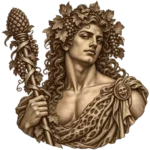 DionysusAssociated through rustic revelry and nature cult
 AresContrasted with panic-like fear in war, though not closely linked genealogically
 PhobosComparable but distinct form of fear
 ApolloMusical counterpart and contrast
 ArtemisShared mountain and wilderness associations