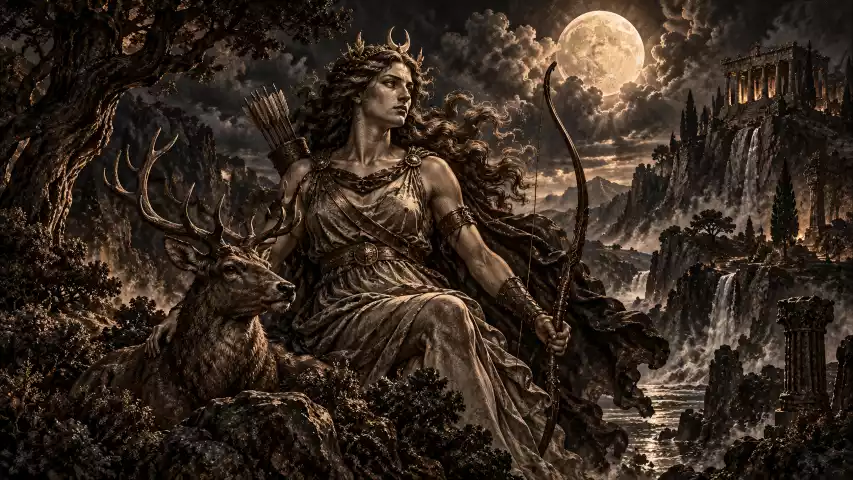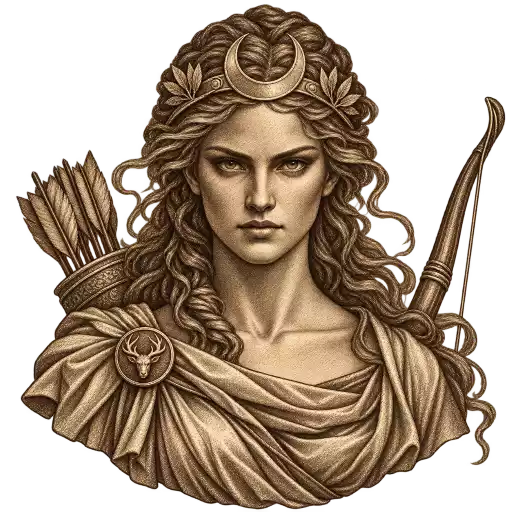
Artemis is one of the principal goddesses of Greek mythology. She is associated with hunting, wilderness, wild animals, young women, childbirth and the protection of those passing through important stages of life.
She is the daughter of Zeus and Leto and the twin sister of Apollo.
Birth
Artemis and Apollo were born after their mother Leto struggled to find a safe place to give birth because of Hera’s hostility. Delos became especially sacred to the twins.
Goddess of the Hunt
Artemis is the great divine huntress of Greek mythology. She is frequently depicted carrying a bow and moving through forests and mountains accompanied by wild animals or female attendants.
Wilderness
Unlike deities whose identity centers on cities and political institutions, Artemis possesses a strong connection with uncultivated landscapes, mountains, forests and boundaries between civilization and the wild.
Virgin Goddess
Artemis is one of the major virgin goddesses of the Olympian pantheon. Myths frequently emphasize her rejection of marriage and her defense of personal autonomy.
Young Women and Childbirth
Despite being a virgin goddess, Artemis was associated with childbirth and the protection of young women. This reflects her broader role in transitions between stages of life.
Actaeon
The myth of Actaeon is one of the most famous narratives concerning Artemis. After violating a sacred boundary, Actaeon is transformed into a deer and killed by his own hunting dogs.
Niobe
Artemis and Apollo punish Niobe after she boasts of having more children than their mother Leto. The myth demonstrates the severe consequences of insulting divine honor.
Worship
Artemis was worshipped throughout the Greek world in highly varied local forms. The sanctuary of Artemis at Ephesus eventually became one of the most famous temples of the ancient world.