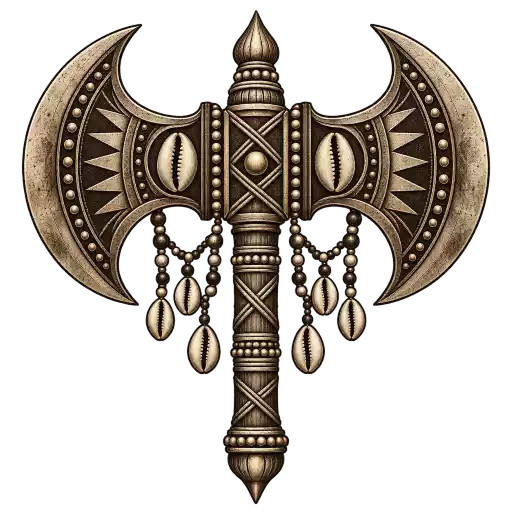
What Vodun names
Vodun (also written Vodún or Vodu) designates interconnected religious traditions of southern Benin, Togo and neighboring parts of West Africa, especially communities speaking Fon, Ewe and other Gbe languages. The term can describe a spiritual power, an individual divinity and the practices through which families and communities honor such beings. It is not a single institution with one founder, centralized creed or universally binding sacred book. Local histories, priestly houses and the obligations of particular shrines shape what devotees mean when they describe themselves as serving the vodun.
A religion rather than a horror stereotype
European and North American entertainment has long associated the word voodoo with dolls, curses and spectacular magic. Those images are poor descriptions of the everyday religion of devotees who seek protection, healing, justice, fertility, reconciliation and continuity with their ancestors. Vodun includes difficult or feared powers, but the difference between a dangerous spiritual force and a socially beneficial religious service is central to many accounts. Reducing the tradition to sorcery erases living communities and the ethical relationships that organize rites, shrines and households.
Geography and languages
The historical centers of Aja-Fon and Ewe religious life lie around the Bight of Benin, although borders drawn in the colonial period cannot map the limits of earlier cult communities. Related religious vocabularies exist across southeastern Ghana and southwestern Nigeria, often in conversation with Yoruba-speaking societies. The distribution of a deity or ritual does not necessarily match a modern national boundary. A shrine network, marriage relationship, trade route or lineage migration may explain why apparently similar cults bear differing names in neighboring towns.
No simple founding date
Vodun developed across centuries through local religious practice, political alliances, trade and the movement of people. Archaeology and documentary records illuminate some contexts, but they do not provide a single foundation year or a named historical founder. Accounts that derive every existing vodun from one primordial pantheon simplify a changing landscape. Sacred histories preserve significant community memories while court documents, colonial descriptions and modern fieldwork show institutions being reorganized. An honest chronology therefore distinguishes mythic origins, documented royal sponsorship and contemporary religious life.
The kingdoms of Allada and Dahomey
The rise of the kingdoms of Allada, Whydah and Dahomey influenced the organization and public standing of particular cults. Rulers recognized, patronized, adopted or subordinated shrines as political circumstances changed. Religious authority was never merely an accessory to state power: cult families and specialists could preserve obligations and histories that rulers had to negotiate. Older literature sometimes depicts Dahomean religion as a perfectly ordered hierarchy imposed from above; comparative historical work reveals more negotiation, competing sanctuaries and incorporation of newly encountered powers.
The Atlantic slave trade
The forced displacement of Africans through the transatlantic slave trade transformed religious history on both sides of the ocean. Enslaved people carried languages, songs, ritual knowledge, sacred names and communal practices to the Americas under conditions of extreme violence. They did not export an unchanged and complete religious system. In Haiti, Louisiana, Brazil and elsewhere, descendants created new institutions in conversation with other African traditions, colonial Catholicism and local circumstances. The history of Vodun must acknowledge enslavement without treating its African communities as mere precursors to American religions.
Vodun and Haitian Vodou
Haitian Vodou and West African Vodun are historically related but should not be collapsed into one set of doctrines or interchangeable deities. The Haitian organization of lwa, its Rada and Petwo rites and its national history emerged from a specific Atlantic setting. Similar names, including Legba or serpent powers, may indicate connections without proving identical personalities, rituals or functions. The appropriate comparison follows linguistic and historical links while respecting transformations in ritual institutions, music, saints and the social worlds created by displaced Africans and their descendants.
Religion and Christian or Muslim belonging
Religious affiliation in Benin and Togo does not always correspond to the exclusive categories used in census forms. Some households honor lineage vodun and ancestors while identifying publicly with Christianity or Islam, whereas other practitioners maintain more exclusive religious identities. Such combinations have particular histories and cannot be reduced to a universal formula called syncretism. The presence of churches, mosques and vodun shrines in the same town may reflect coexistence, tension, exchange, family obligations or deliberate separation, depending on place and generation.
Colonial encounters and misrepresentation
Travelers, missionaries and colonial administrators described West African religions through categories of fetishism, idolatry or primitive superstition. Their reports preserve observations and sometimes valuable transcriptions, but also embed political interests and racial hierarchies. A scholarly account must not repeat those classifications as neutral descriptions. Cross-reading with oral histories, material evidence and research conducted with practitioners makes it possible to identify where an outsider misunderstood an object, isolated a dramatic ceremony or mistook a local practice for a universal rule.
Twentieth-century change
Urbanization, migration, education, nation-building and media reshaped the visibility of Vodun during the twentieth century. Religious communities continued to initiate specialists, maintain shrines, negotiate land and articulate their position in changing political landscapes. Public recognition could open opportunities while also encouraging simplified presentations for tourism. The religious life of a family courtyard may differ from an officially staged festival, and both deserve accurate description. Contemporary practice is neither an untouched survival from antiquity nor a mere invention of modern heritage policy.
Ouidah and public heritage
Ouidah occupies a prominent position in discussions of Vodun, particularly because of its older kingdom, sacred python traditions, slave-trade memorial landscape and public celebrations. Its historical importance must not be used to imply that every vodun of West Africa originates in Ouidah. Sanctuaries in Abomey, Porto-Novo, Sakété, Togo and numerous smaller communities preserve distinctive obligations. Sacred routes and commemorative monuments also express modern choices about heritage. Visiting a public shrine offers only one perspective on the private discipline of initiation and domestic worship.
Religious life and social obligation
Vodun practice can regulate obligations among the living, the dead and the sacred powers through family membership, vows, offerings, inherited responsibilities and specialized knowledge. Shrines may mediate disputes, heal relationships or preserve a genealogy and a sense of place. None of these functions means that every shrine holds legal authority or that all practitioners follow the same code. Community life can include disagreement about proper ritual, legitimate priests and the interpretation of signs. Religion is lived through ordinary decisions as much as through ceremonies recognizable to a visitor.
Vodun as living heritage
UNESCO has described Vodun in Benin as beliefs, social practices and ways of living, with deities connected to natural domains and ancestors central to community memory. Its 2025 preparatory assistance concerned a nomination process rather than proof that the tradition had already been inscribed on the Representative List. Cultural heritage recognition can support transmission, documentation and consent-based participation, but an inventory is not a substitute for practitioners defining their own religious lives. Editorial presentation should follow dated institutional statements and avoid presenting a proposed listing as a completed one.
Approaching the subject responsibly
A useful description distinguishes practitioner testimony, oral narratives, royal chronicles, colonial records and modern scholarship. These kinds of evidence answer different questions. A foundation myth may explain why a shrine is sacred without furnishing a date that can be verified independently; a colonial report may document a ceremony while distorting its purpose. The historical study of Vodun should therefore preserve named local variants and uncertainty. The objective is not to rank communities by supposed authenticity, but to explain the relationships through which religious knowledge survives and changes.
There are no published entities in this directory yet.
Mawu and Lisa
Among Fon-speaking traditions, Mawu and Lisa can appear as complementary divine principles, often described through feminine and masculine aspects and associations with cosmic order, night and day. Yet accounts vary: some distinguish the two strongly, while others speak of Mawu-Lisa as an encompassing divine reality. One should not present a diagram of divine parents and children as fixed across all regions. Research into local liturgy and oral narratives matters more than importing a simplified pantheon borrowed from an introductory encyclopedia.
Legba at thresholds
Legba is connected in many Aja-Fon and Ewe settings with access, passage, communication and ritual thresholds. He is not uniformly identical to the Haitian Papa Legba, and his African images and associations should not be replaced by the familiar portrait of an elderly man with a cane. Different shrines link him to sexuality, movement, ambiguity or mediation. His placement at entrances reflects the practical necessity of establishing relationships correctly before addressing other powers. Specific offerings and invocations belong to local ritual lineages rather than a universal prescription.
Sakpata and affliction
Sakpata is closely associated with earth and, in many accounts, with smallpox and the management of contagious affliction. His religious significance cannot be reduced to a supernatural disease agent: priestly specialists may also emphasize restraint, protection and restored balance. Historically, societies facing epidemic suffering developed complex explanations and forms of response, and these should be studied without confusing religious claims with medical causation. Local prohibitions surrounding the sacred name or cult may differ significantly between neighboring communities.
Hevioso, thunder and fire
Hevioso, also rendered Hêbiosso or Xevioso in differing transcriptions, belongs to the complex of thunder, lightning, rain and powerful celestial judgment in various regional traditions. Narratives may link him to justice or the punishment of violated obligations, but these associations should not be generalized into a single judicial hierarchy. Thunder cults can overlap with other West African religious spheres while retaining independent histories. Identifying Hevioso directly with the Yoruba Shango in every context would obscure both traditions and their local arrangements.
Dan and sacred serpents
Dan can be associated with serpentine movement, the rainbow, air and forces sustaining or encircling the world. The sacred python cult of Dangbe in Ouidah has its own local history and should not be collapsed mechanically into every Dan tradition. Serpent imagery is polyvalent: it may signal protection, continuity, fertility, cosmic arrangement or a particular tutelary relationship. Modern comparisons with the Haitian Danbala can illuminate Atlantic connections only when the development of each cult is kept visible.
Gu and iron
Gu is associated with iron, metalwork, tools, technical skill and, in some settings, war. The figure offers an important window into the religious place of smiths, weapons and craft in communities where iron transformed agriculture, mobility and political power. A comparison with Ogun in Yoruba traditions may be instructive, but they are not interchangeable categories in a database without documentary justification. Sacred implements must be interpreted through the specific shrine and the obligations surrounding their use.
Tôhôssou and water
Tôhôssou, also transcribed Tohosu or Tovodun in certain contexts, is associated in contemporary heritage descriptions with water and with distinctive ritual traditions. Historic studies of Dahomean religion also discuss tohosu in relation to unusual births and royal sacred lineages. Such evidence should not be fused into one universal profile, because names, family relations and rites vary in time and place. The correct encyclopedic treatment records each claim with its source and avoids presenting a single dramatic explanation as the only meaning of the deity.
Aizan, markets and community order
Aizan or Ayizan is represented in some Fon and Atlantic religious materials as a protective power of marketplaces, commerce, initiation or established social order. Her placement varies across local cults, and the Haitian Ayizan has a developed liturgical personality within Vodou that must not be projected backward unchanged onto Africa. Studying market shrines reveals how sacred obligations are woven into exchange, regulation, public gathering and the reputation of ritual specialists. A shrine can therefore protect relationships as much as a physical location.
Loko and sacred trees
Loko is associated in various accounts with trees, sacred vegetation, initiation and the transmission of ritual knowledge. However, names and offices differ between Beninese or Togolese usage and Haitian lwa traditions. A sacred tree is not merely a decorative symbol but can be a site of memory, prohibition, presence or negotiated land use. The variety of associated rites warns against turning every tree cult into a generic worship of nature. Particular trees and grove histories matter to the people whose obligations surround them.
Agasu and dynastic memory
Agasu, often associated with a leopard and royal origin narratives in the Dahomey region, illustrates how dynastic memories and sacred identities can intersect. The leopard may represent descent, authority and a particular founding history; it should not automatically be treated as a universal symbol for Vodun. Court traditions changed as political institutions developed, and oral genealogies sometimes serve more than one purpose. The researcher should identify whether a statement concerns a royal cult, a local shrine, an emblem or a later interpretation of kingship.
Fa as divinatory knowledge
Fa designates a complex of divinatory knowledge, procedures, interpretive signs and teachings, with historical links to neighboring Ifá systems without being reducible to them. A bokonon is a trained specialist whose authority involves apprenticeship, interpretation and social responsibility. Fa is sometimes described in spiritual terms as well as a corpus of knowledge; different practitioners give those aspects different emphasis. A scholarly description should explain its role in decision-making and consultation without making unverified promises that divination reliably predicts events.
The ancestors
Ancestors are not simply a peripheral addition to a fixed pantheon. The dead of families, lineages and communities may be approached through obligations, remembrance, offerings and special ceremonies. Their status does not mean every deceased person is automatically a divinity or that all kin groups employ identical rites. Ancestral claims can connect a shrine with inheritance, residence, authority and moral expectations. In this sense, the relation between the living and the departed is a social and religious structure through which communities negotiate continuity and change.
Priests and priestesses
Religious authority can belong to priests, priestesses, heads of shrine houses, custodians of family obligations and diviners. The precise titles, roles and gender distributions vary across languages and cults. It would be misleading to invent a single pan-Vodun hierarchy from high priest to novice. Specialists may be respected for knowledge of songs, ritual histories, divination, medicines, restricted procedures and community mediation. Their positions can involve hereditary responsibilities, initiation, individual calling or negotiated recognition by other practitioners.
Initiates and religious houses
Vodunsi is a term used in several settings for an initiated devotee or person dedicated to a vodun, although local naming practices and the requirements for initiation differ. Membership can create enduring obligations toward a shrine, teacher and fellow initiates. Ritual knowledge is not always public, and a responsible account respects boundaries rather than pretending to reveal hidden secrets. Apprenticeship often conveys practical skills, language, music, bodily discipline and norms of reciprocity. Houses are living communities, not interchangeable copies of one imaginary occult order.
Sacred narratives and historical evidence
Vodun creation narratives, divine genealogies and shrine foundation stories are not uniform across Fon and Ewe communities. A story may make a relationship intelligible within a local cult without specifying events that can be independently dated. Other narratives preserve traces of political encounters, changes in lineage status or movement of religious specialists. Treating oral sources as living explanations while comparing them with inscriptions, objects and written history prevents both uncritical literalism and dismissive reduction to folklore.
Mawu-Lisa and creative order
Accounts of Mawu-Lisa can articulate creation through a divine complementarity rather than a single story with one universally fixed sequence. Themes include the arrangement of the world, the creation of human beings, the ordering of time and the articulation of distinct sacred powers. Some descriptions connect particular divine aspects with celestial rhythms. Neither a modern chart of elemental correspondences nor an imported Christian model of creation should be mistaken for a complete transcription of local accounts. The diversity of oral variants is itself part of the religious record.
Plurality of powers
A vodun may be described in relation to thunder, earth, water, iron, disease, marketplaces or ancestors, but these associations do not make every figure a mechanical personification of a natural element. Deities are encountered through histories, prohibitions, songs, objects, lineages and special responsibilities. Relations between powers vary, and multiple cults can inhabit the same town without agreeing on a fixed genealogy. The language of a pantheon is helpful only when it does not conceal the social institutions that make each power meaningful.
Serpents and the landscape
Serpents can signify continuity, vitality, guardianship and the connection between land and sacred power. The python of a particular sanctuary is not automatically the cosmic serpent of every creation narrative, and Dan cannot be assigned a single iconographic meaning for every town. Sacred animals often belong within regimes of care, restrictions and inherited duties. Their religious status may shape how people move through a landscape, interact with a grove or understand a local history. Contemporary animal symbolism cannot be separated from these community practices.
Illness and causation
Some traditions interpret suffering through relationships with vodun, ancestors, breaches of prohibition or conflict among people. These interpretations belong to religious understandings of misfortune; they should not be presented as established biomedical causes. A specialist may combine prayers, social reconciliation and plant knowledge, while families may also seek clinical treatment. The historian must distinguish an account of what adherents believe from medical advice. Assertions that any specific illness is certainly caused or cured by a spiritual entity are beyond what the sources can verify.
Divination and moral choice
Systems of divination such as Fa are used in some communities to interpret difficult choices, obligations and perceived signs. Their ritual authority may rest on a corpus of patterns, sayings and specialist training. In everyday use, divination can be intertwined with deliberation about family disputes, journeys, illness or promises. It should not be represented as a universal decision-making requirement for all Vodun adherents, nor as scientifically demonstrated foreknowledge. Its importance is better explained through the relationship between expert interpretation, client expectation and communal responsibility.
Possession and embodied encounter
Spirit possession or trance occurs in particular ceremonies and has received extensive ethnographic attention. Participants may understand unusual movement, speech, dancing or changed demeanor as signs of a vodun becoming present. That interpretation is not interchangeable with a medical diagnosis or a theatrical performance invented for spectators. Rules of preparation, recognition and care belong to each religious setting. The rite cannot be summarized responsibly as every worshipper becoming possessed whenever drums are played; many kinds of music, prayer and ordinary service occur without such an event.
Promises, prohibitions and reciprocity
Relationships with particular vodun often involve commitments, ritual restrictions and expectations of reciprocal care. A restriction may concern food, behavior, objects, times or the handling of a shrine, but none of these can safely be declared universal. Transgressions can be interpreted as morally and spiritually consequential, and their resolution may require consultation or reconciliation. From an academic perspective, these practices show how ethics is embodied in everyday responsibilities rather than confined to an abstract list of commandments.
Ancestors and death
The place of the dead within Vodun cannot be captured by a single map of heaven, hell and judgment borrowed from another religion. Ancestors may be regarded as continuing participants in household welfare or as powers who require respectful remembrance. Their significance can change with lineage, seniority, funerary status and community history. Memorial rites and the treatment of remains are locally specific; descriptions should avoid inventing a universal underworld ruler or a fixed cycle of reincarnation for all practitioners.
The four elements as a public summary
UNESCO documentation for a Beninese heritage proposal associates Tôhôssou with water, Sakpata with earth, Dan with air and Hêbiosso with fire. This is a useful sourced overview of one public presentation, not a universal table defining every vodun throughout history. The same deity may be understood through additional roles, and different communities may structure relations differently. An encyclopedia should report the association together with its institutional origin and avoid treating it as an ancient scripture or obligatory doctrine.
Kingship and divine legitimacy
Sacred histories of rulers, ancestors and animal powers can support claims about rightful succession and political authority. Royal patronage of a cult may leave material traces or written descriptions, but a ritual genealogy is not identical to a neutral chronological record. Historical inquiry asks who circulated the account, at what time and with what interests. This approach respects the place of sacred narratives for communities while protecting the reader from confusing dynastic legitimation with independent proof of supernatural descent.
Differences from orisha systems
Vodun traditions have meaningful contacts with Yoruba religious worlds, yet a Fon vodun is not automatically the same entity as an orisha with a partly similar function. Divinities of iron, thunder or crossroads may share broad motifs through centuries of exchange, conquest and migration. Those encounters demand precise documentary comparison rather than a flat table of equivalences. Modern databases should preserve separate traditions and connect figures only where a historical link can be explained, especially when a name was transformed in Atlantic diaspora religions.
No single canon or doctrine of evil
Vodun does not possess a single universal book comparable in authority and function to scripture-centered traditions. Sacred knowledge circulates through speech, music, initiation, objects, consultation and community memory. Equally, there is no documentary basis for imposing one supreme devil or universal theology of evil on every shrine. Some powers inspire fear or are approached cautiously, but they cannot simply be translated into Christian demons. Such translations historically served polemic and colonial misunderstanding more often than accurate description.
Local differences as a theological fact
Theology in Vodun is not only what a written scholar extracts as a general principle. It is also the knowledge of a particular shrine about its deity, its neighbors, its ancestors and the conduct required of devotees. A claim valid for one lineage can be rejected or modified elsewhere without making either community an inauthentic version. That plurality is a positive fact of the religious landscape. Readers should therefore approach every attributed power, kinship or sacred object with an eye to locality, language and the history of its transmission.
Shrines and family courtyards
Vodun worship may take place at elaborate public sanctuaries, smaller neighborhood shrines, family compounds and places marked by particular trees, stones or objects. Sacred space derives from relationships and obligations rather than from architecture alone. Some areas are accessible to visitors while others are reserved for initiated participants or designated custodians. A responsible historical account does not assume every sacred place can be photographed, entered or publicly described. The appearance of a shrine can change with renovation, political sponsorship and local ritual history.
Offerings and service
Offerings may include food, drink, crafted objects, songs or other forms of dedicated service according to the cult and occasion. Some traditions also practice animal sacrifice, which must be described with historical specificity rather than sensational detail or a claim that it is universal. Participants may understand offerings as honoring, sustaining or renewing a relationship with a spiritual power. The material form alone cannot explain a rite: the meanings attached to it depend upon prayers, obligations, kinship and the authority of those responsible for the sanctuary.
Music, drumming and dance
Musical performance is a vehicle of religious knowledge as well as communal experience. Drum patterns, songs, call-and-response singing and dance can identify the presence or character of particular powers, recall histories and coordinate ceremonial participation. Instruments and musical languages vary between groups. It is misleading to treat the drum as an automatic instrument for inducing possession, or to assume that performance for a festival audience is identical to a lineage ceremony. The context of training, participation and ritual authority makes a musical act meaningful.
Initiation and limits of disclosure
Initiation can include periods of teaching, discipline, changed social status, specific songs and responsibilities toward a deity or sanctuary. Public descriptions may identify these broad features, but the details of restricted procedures belong to the communities that maintain them. Researchers have an obligation to distinguish consented observation from material that practitioners asked to keep private. A public encyclopedia should offer context without promising to reveal formulas, passwords or ceremonies whose disclosure would misrepresent living traditions.
Fa consultation and the bokonon
Diviners trained in Fa traditions may advise clients through established techniques, interpretive patterns and accumulated oral learning. The title bokonon belongs to particular linguistic and institutional contexts and should not be generalized to every ritual officer. Divinatory consultation can address practical tensions as well as explicitly sacred questions. A historical presentation may explain the existence of its instruments and corpus without supplying improvised instructions or claiming guaranteed results. The standing of a specialist depends on local standards of competence and trust.
Festivals and communal calendars
Vodun calendars often arise from the needs of individual shrines, lineages, agricultural seasons and local histories. Public festivals in Benin can bring many groups together, while household observances may take place away from a national celebration. The existence of a public annual event does not prove that every devotee performs identical rituals on that day. Festival descriptions should separate administrative schedules, public processions, religious participation and tourism. Their meaning is better understood through the communities taking part than through a universal list of dates.
Objects and sacred material
Vessels, cloth, iron implements, carved figures, serpent imagery and shrine deposits can acquire significance through consecration, inherited duties and patterns of handling. A museum inventory records provenance and material form but cannot always reproduce the full ritual context of an object. The colonial history of collecting requires attention to how an item was obtained and whose knowledge was used to describe it. It is mistaken to infer that every carved figure represents the same spirit or that an object is merely an idol in the language of colonial polemic.
Healing, plants and social care
Religious specialists may transmit botanical knowledge, care practices, prayer and forms of mediation. These activities should be explained historically and in their social setting. No botanical preparation or ritual is automatically safe or medically effective because it is old or sacred, and belief in an affliction’s spiritual meaning does not preclude clinical medicine. An encyclopedia can document what participants understand by healing without providing unverified treatments. The social support offered by a ritual community may itself be important, independently of claims of supernatural causation.
Oral archives and recorded history
Vodun does not have a single founder-written canon. Researchers reconstruct its history from oral testimony, genealogies, songs, ceremonial knowledge, objects, missionary accounts, royal records, regional archives and ethnography. Each source requires its own critical method. Written materials sometimes privilege elites or outsider observers, while oral narratives can reflect current claims and changes in community memory. Neither should be dismissed wholesale or taken as a transparent photograph of the past. Citing the provenance of every statement is especially important for controversial histories.
Melville J. Herskovits and historical ethnography
Melville J. Herskovits, Dahomey: An Ancient West African Kingdom (1938), is a major early anthropological source for historical descriptions of Dahomean society and religion. It preserves information valuable to comparison, but the period and concepts of its research require critical reading. The work should not be used to make every contemporary temple conform to 1930s observations. Later scholarship, including studies of royal authority and transatlantic histories, can be read alongside it to identify both persistence and transformation in ritual vocabulary.
Suzanne Preston Blier and material religion
Suzanne Preston Blier, African Vodun: Art, Psychology, and Power (1995), examines religious material, power and the interpretation of objects in West African settings. Its focus helps move beyond outsider fantasies that reduce devotional material to exotic charms. An object may participate in a complex arrangement of substances, social relations and meanings that a photograph cannot capture. Academic interpretations should still be identified as the author’s analysis, not as a single doctrine pronounced by every Vodun practitioner.
Edna G. Bay and Dahomey
Edna G. Bay, Wives of the Leopard: Gender, Politics, and Culture in the Kingdom of Dahomey (1998), provides important historical analysis of court, gender and political culture. It is useful when discussing how royal households and religious offices intersected, without turning women’s roles into a single timeless hierarchy. The book belongs to the historical study of Dahomey, not to a scriptural canon of Vodun. A source-conscious account distinguishes Bay’s reconstruction from oral claims and colonial records that she interprets.
Benjamin Hebblethwaite and Atlantic links
Benjamin Hebblethwaite, A Transatlantic History of Haitian Vodou (2021), particularly the chapter on Aja-Fon and Gedevi-Yoruba roots, traces religious connections between the Bight of Benin and Haiti. Its discussion of Legba, Fa, Dan, Sakpata and other powers is valuable precisely because it follows transformations rather than assuming static equivalence. The book is research on interrelated traditions, not evidence that contemporary Haitian and Beninese rituals are identical. Comparisons should identify when an observation concerns Haiti rather than an African shrine.
UNESCO and contemporary documentation
UNESCO Intangible Cultural Heritage, Vodun, beliefs, social practices and ways of living (Benin, preparatory assistance 2025–2026), documents an official heritage initiative and the public framing of divinities and ancestors. This is evidence of contemporary institutional description and nomination support; it is not an ancient sacred text or proof of a completed inscription. Reference: https://ich.unesco.org/en/assistances/vodun-beliefs-social-practices-and-ways-of-living-02386?cote_new=02386 . For an academic collection, see Eric J. Montgomery, Timothy R. Landry and Christian N. Vannier, eds., Spirit Service: Vodún and Vodou in the African Atlantic World (2022).
Source comparison and editorial methodology
For precise history, compare an oral account with the community that preserves it, the date of transcription and the social setting of its collection. Compare material objects with their provenance and with relevant shrine contexts; distinguish an ethnographer’s analysis from statements by practitioners. Avoid treating colonial labels such as fetish worship as neutral classification, and distinguish Beninese Vodun from related Atlantic religions. This method supports accurate articles about individual spirits without replacing genuine variation by a convenient universal taxonomy.